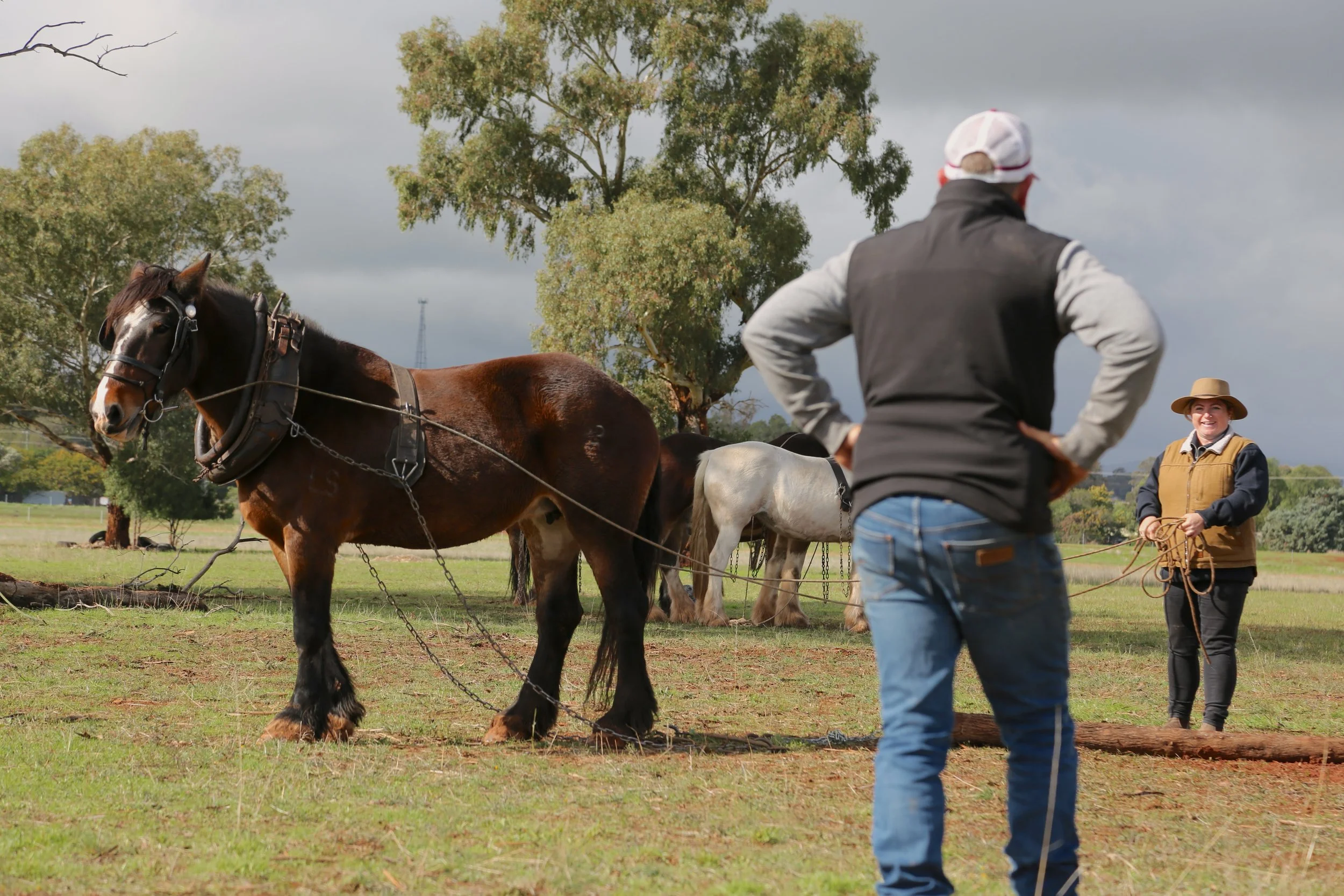
Contestants having fun at The Golden Plough Festival
A Weekend I Wish Had Lasted Longer
I travelled to the Golden Plough Festival expecting to learn more about horse ploughing and Australia's draught horse community. What I found was a welcoming group of people working hard to preserve a way of life that is slowly disappearing, and a festival that left me feeling inspired long after I drove out of the showgrounds.
The drive into Peak Hill was beautiful.
Recent rain had transformed the countryside and the paddocks were greener than I expected. After years of hearing stories about drought conditions across parts of regional Australia, it felt good to see the landscape looking so healthy again. The further I drove, the more I found myself slowing down and appreciating the view.
By the time I arrived at the showgrounds, low clouds drifted overhead and the occasional patch of sunshine broke through. It felt like perfect weather for a weekend outdoors.
One of the first things I noticed was how intimate the festival felt.
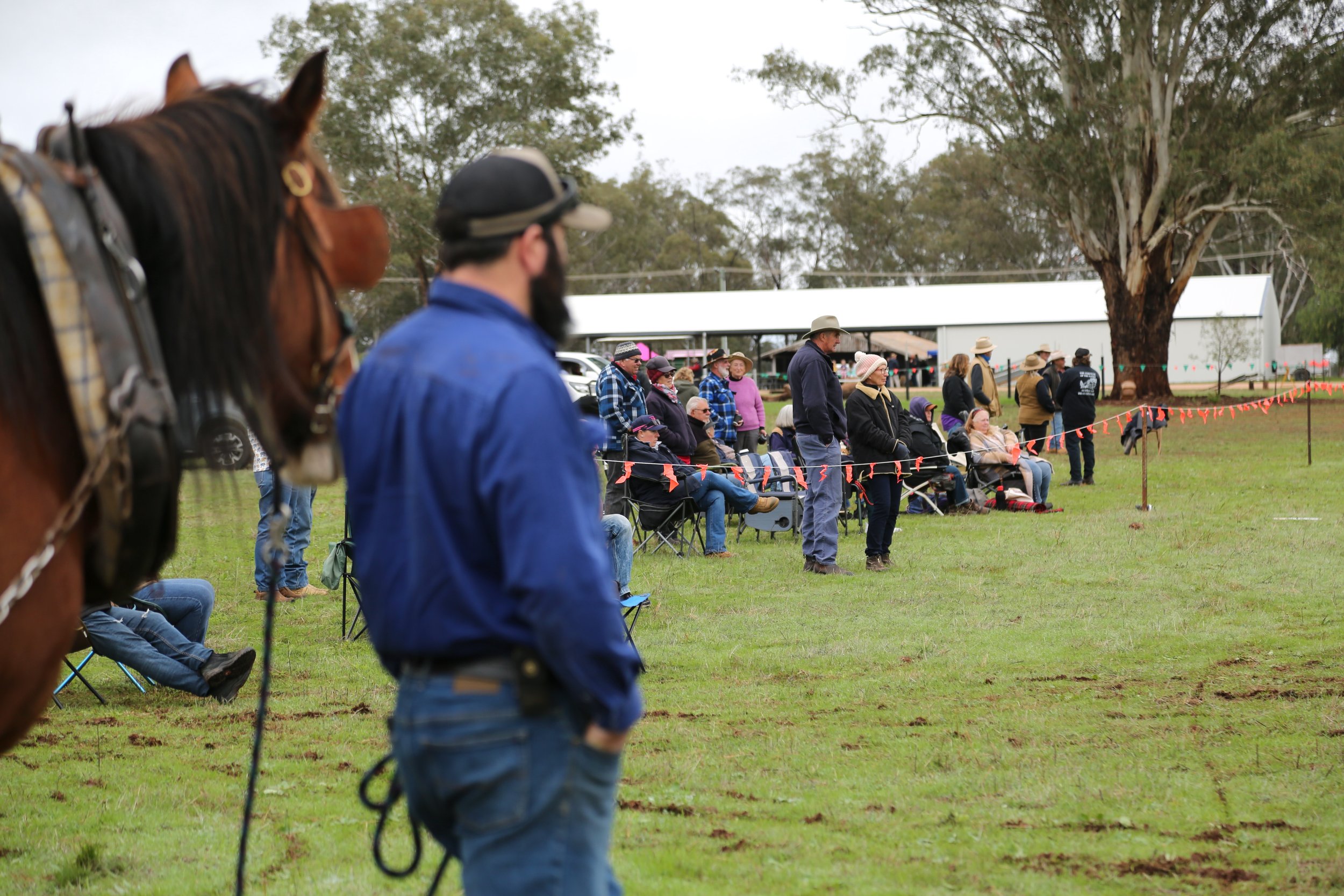
Spectators at The Golden Plough Festival
The Golden Plough is often described as Australia's premier horse ploughing competition, yet there was nothing intimidating about it. There were no long queues, no crowds pushing past one another and no sense that anyone was in a hurry. The organisers were welcoming and approachable, competitors chatted freely with spectators and the horses stood quietly in their yards enjoying breakfast while the grounds slowly came to life around them.
I remember wandering through the horse yards before the first competition began, taking photographs and watching the people prepare for the day ahead. The horses looked relaxed and content, munching in their lucerne hay breakfast, while owners and handlers caught up with friends and discussed the weekend's events.
At 8am, competitors gathered for the safety briefing before making their way to the ploughing paddocks.
As someone who had never spent much time around horse ploughing before, I found myself fascinated by the judging process. The announcer explained what the judges were looking for, from the strike out and straightness of the furrows through to the consistency of depth and the quality of the finished plot. It quickly became obvious that horse ploughing is far more technical than many people realise. Every furrow mattered, every turn mattered and horsemanship played a significant role throughout the competition.
What surprised me most, however, was how enjoyable it was to simply sit and watch.
Spectators brought their own camp chairs and settled in for hours at a time, coffee cups in hand, chatting quietly while keeping one eye on the competitors. There was something deeply relaxing about the whole experience. Watching horse teams work steadily across a paddock requires patience, but perhaps that is part of the appeal. It encourages you to slow down as well.
At first, I was focused on capturing everything.
I wanted photographs of every horse, every demonstration and every interesting moment. Somewhere during those first few hours though, I realised I was spending so much time documenting the festival that I wasn't fully experiencing it.
So I slowed down.
I started having longer conversations with people. I spent more time watching and less time worrying about whether I had captured the perfect photograph. I wandered between demonstrations without a strict plan and allowed myself to simply enjoy being there.
That was the point when the festival began to feel less like work and more like a weekend away with people who shared a genuine love of horses, history and the Australian bush.
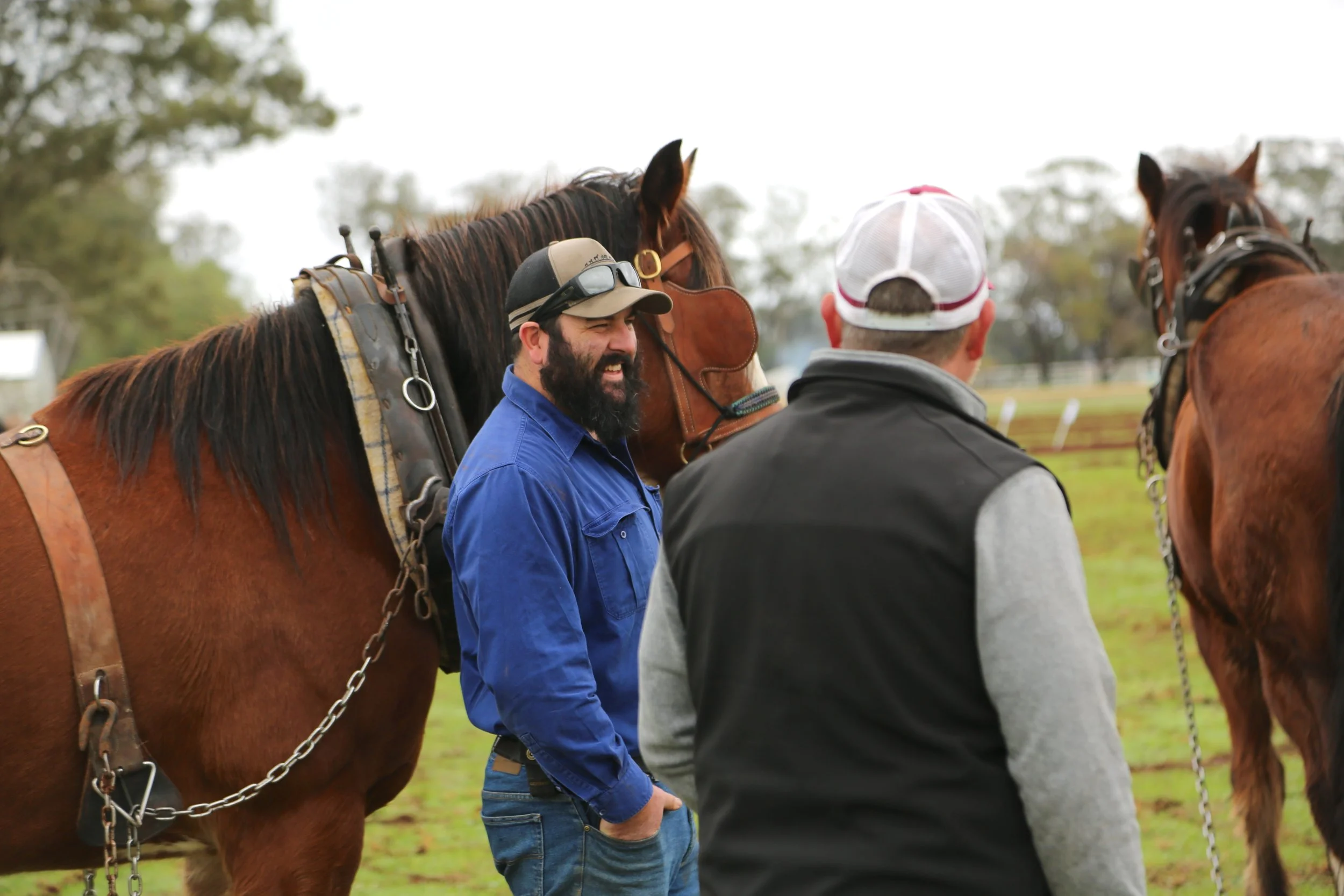
Men having a laugh at the Golden Plough Festival
The People Behind the Horses
As much as I enjoyed watching the ploughing competition, it was the people who left the biggest impression on me.
Throughout the weekend I spent time speaking with members of the Australian Draught Horse community, particularly those involved in the working horse side of the discipline. What stood out almost immediately was how welcoming everyone was.
There was no sense of knowledge being guarded or newcomers being viewed as outsiders. In fact, quite the opposite. People were eager to explain what they were doing, answer questions and share stories about their horses.
One competitor, Dave, had only recently become involved in ploughing. As we spoke, he told me how supportive the community had been since he started. Members had lent him horses and equipment, encouraged him to compete and helped him learn the skills needed to participate.
I loved hearing that.
In many horse disciplines, getting started can feel intimidating, especially when specialised knowledge and equipment are involved. Here, the attitude seemed to be that if someone wanted to learn, the community would do everything they could to help them succeed. He won the the Novice Plough Champion 2026 on the second day of the festival, which was wonderful to see.
Dave Hollier also runs a program called Bushbread Horse Assisted Learning Programs, helping young people learn valuable life skills through horses and practical experiences. Listening to him speak about his work and seeing how warmly he had been embraced by the community reinforced something I noticed again and again throughout the weekend. The people involved in this world are incredibly generous with their time, knowledge and support. There was no ego, unlike with other equine sporting events.
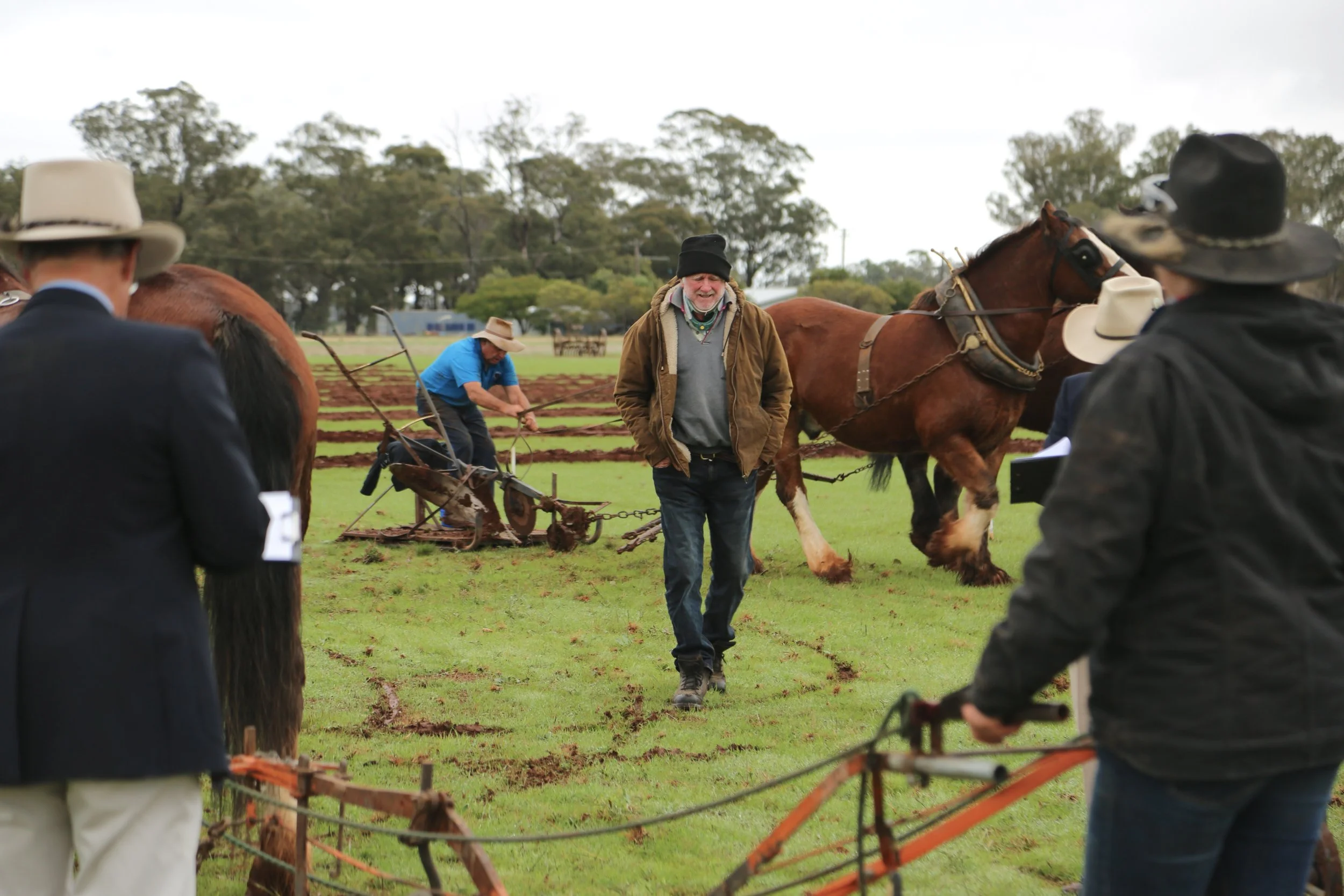
A plough falls over at The Golden Plough Festival
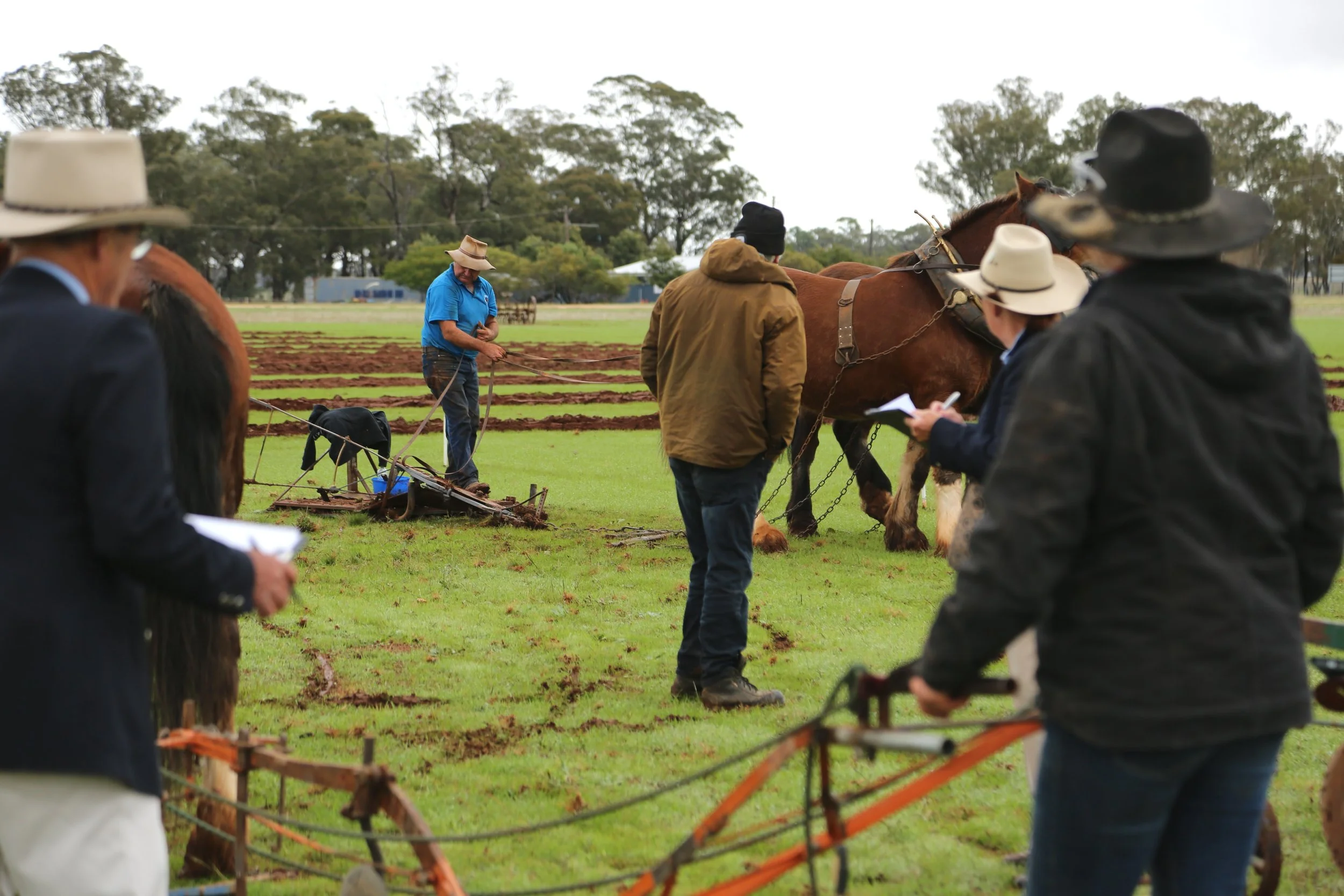
Everyone looks at the fallen plough and check in to make sure the competitor is ok at The Golden Plough Festival
More Than a Competition
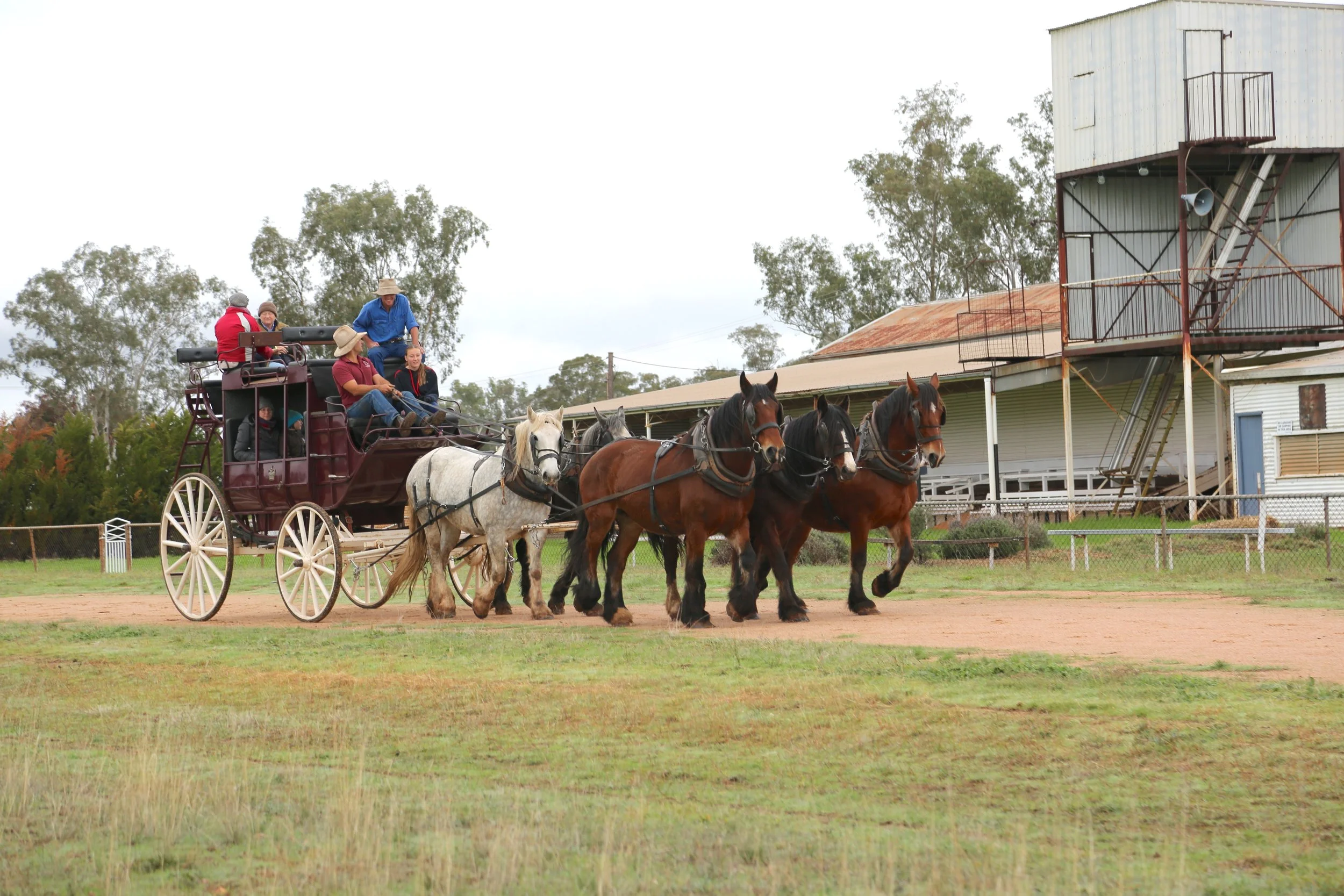
Five horse carriage at The Golden Plough Festival
The ploughing competition may be the centrepiece of the Golden Plough Festival, but there is far more happening throughout the weekend than most people realise.
Log snigging demonstrations showcased the power and precision of draught horses working timber. Large horse teams demonstrated how farming was once done before tractors became commonplace. Carriage rides gave visitors the chance to experience horse-powered transport, while junior competitions encouraged the next generation to become involved.
What impressed me was the amount of effort required to make all of this happen.
At one point I overheard a conversation about some of the equipment and demonstrations that had been brought to the festival. One member laughed that Aleks always wanted to bring even more things to showcase but sometimes forgot he was only one man. It was said affectionately, and it highlighted something I came to appreciate over the course of the weekend.
These people genuinely love what they do. Often, reaching into their own pockets to support the Drought Horse Society when needed and donating their time to keep genuine old traditions alive. The President of the Dought Horse Society (Western Branch) also stated that these traditions are hanging on by the teeth, so it is worth supporting wonderful festivals such as The Golden Plough to help preserve this wonderful heritage.
The Stories That Stay With You
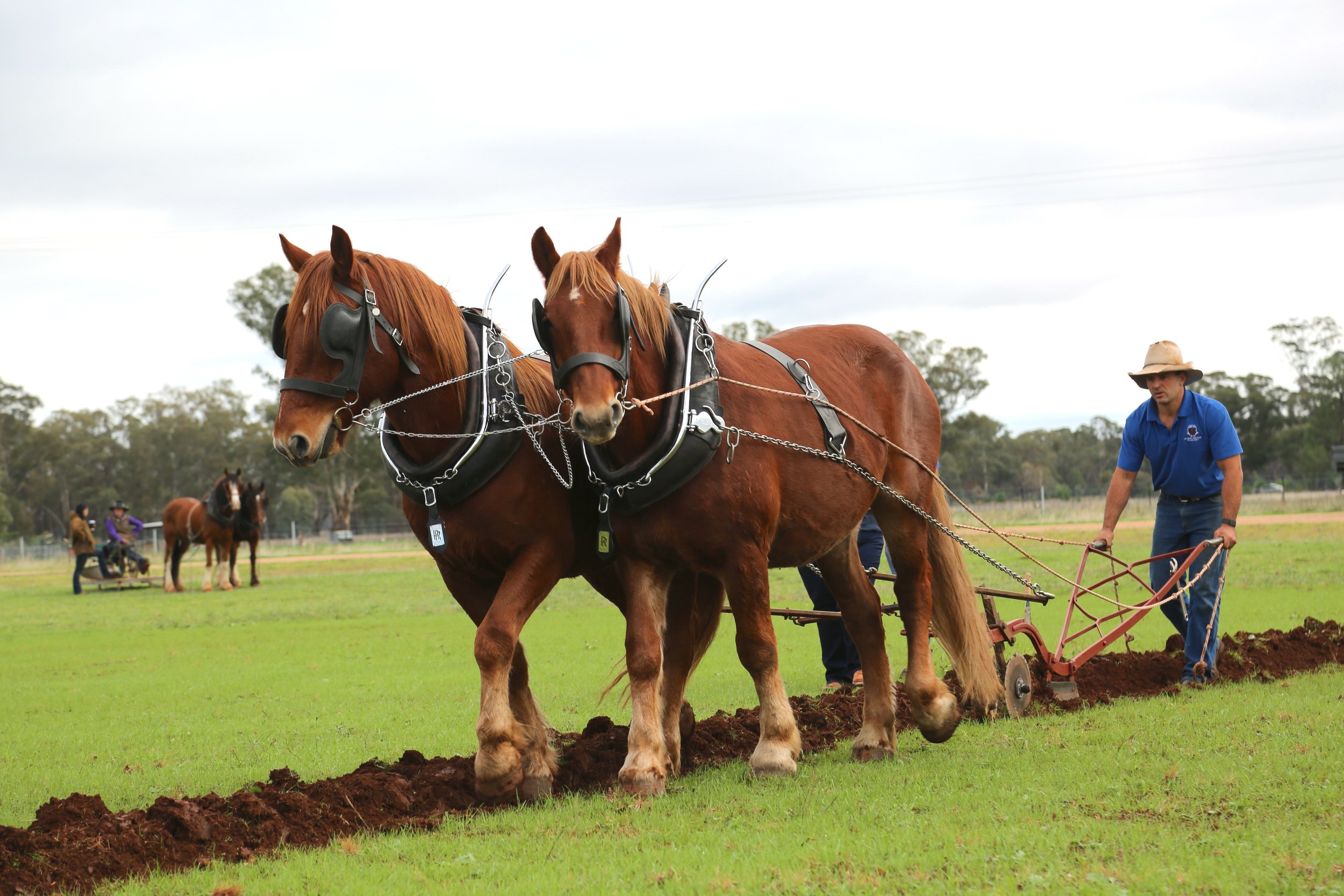
Horses Rolls & Royce, owned by Aleks Berzins, at The Golden Plough Festival
One of the joys of attending events like this is discovering the stories that exist behind the competition itself.
I found myself drawn to a beautiful pair of chestnut draught horses named Rolls and Royce, owned by Aleks Berzins. With their matching appearance and distinctive silver detailing on their harness, they were hard to miss. They looked almost like twins and worked with the kind of quiet confidence that comes from years of training and partnership.
Aleks would go on to win the Golden Plough competition with them, but what interested me just as much were the stories surrounding the people involved.
I learned about the friendly rivalry between Aleks and Jason Gavenlock, a previous three-time Golden Plough winner and President of the Australian Draught Horse Society Western Branch. Far from being competitive in a negative sense, the rivalry seemed built on mutual respect and a shared desire to continually improve.
Jason openly acknowledged the work Aleks had put into his horsemanship, while also joking about their ongoing battle for top honours. Listening to them speak, it was obvious that both men genuinely admired each other's abilities.
Those sorts of stories bring an event to life.
The competition results matter, but it is the relationships, shared history and respect between competitors that people remember.
Preserving Knowledge Before It Disappears
One conversation stayed with me long after the festival ended.
Several members spoke about the incredible amount of knowledge still held within the working horse community. At the same time, they acknowledged that some knowledge has already been lost.
When horses were a necessity rather than a hobby, these skills were simply part of everyday life. Children grew up watching their parents work horses. Techniques were passed down naturally through generations because they were needed.
Today, much of that knowledge survives because passionate individuals choose to preserve it.
That distinction felt important.
The people involved in the Golden Plough Festival are not simply maintaining a competition. They are preserving fragments of Australian history that might otherwise disappear.
Every demonstration, every conversation and every newcomer welcomed into the community helps keep that knowledge alive.
It also made me appreciate the role of organisations like the Australian Draught Horse Society even more. The members understand that preserving heritage requires active participation. Knowledge cannot survive if it is never shared.
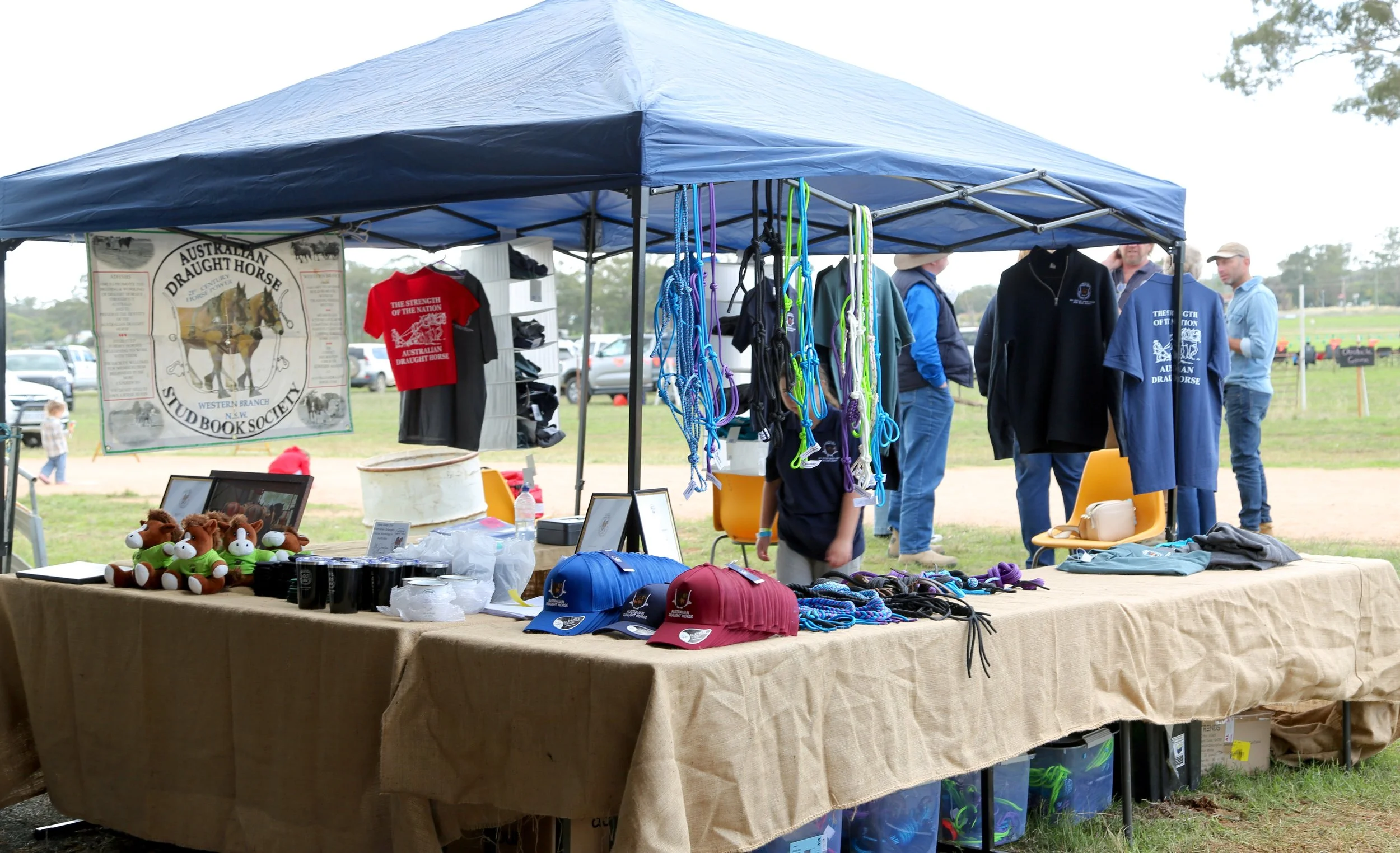
Austraian Drought Horse Society Stand at The Golden Plough Festival
A Festival That Leaves You Feeling Better
One of the things I loved most about the Golden Plough Festival was how it made me feel.
Many events leave you exhausted.
You spend the entire day rushing between activities, trying to fit everything in before heading home feeling like you need a holiday to recover.
This was the opposite.
The atmosphere throughout the weekend felt relaxed and genuine. People took the time to stop and chat. Spectators watched quietly from their camp chairs. Horses received plenty of pats and attention between demonstrations.
One moment that stood out was during the carriage rides. There was still a line of people waiting for their turn, yet organisers stopped the rides because they felt the horses had done enough for the day. Nobody complained. The horses came first.
That simple decision said a great deal about the values of the people involved.
Visitors ranged from young children through to people well into their nineties. Some were lifelong horse people while others were simply curious. Every person seemed welcome.
I even noticed cars pulling up outside the showgrounds to watch the ploughing for a while before continuing on their journey.
There was something special about seeing people pause and take an interest in a tradition that has become increasingly rare in modern Australia.
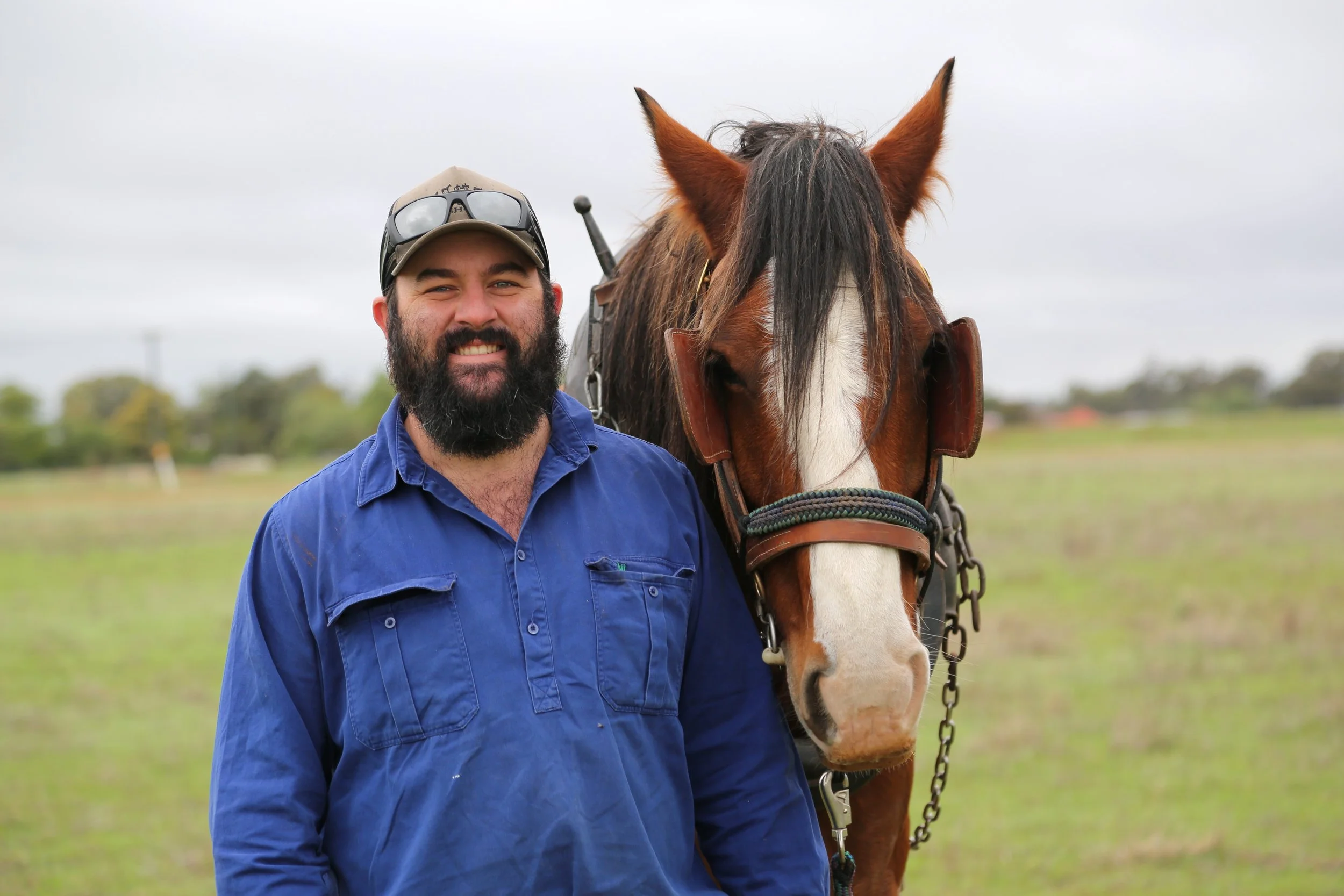
A smiling man and his horse at The Golden Plough Festival
Why This Weekend Mattered
As I drove away from Peak Hill, I found myself reflecting on why the weekend had affected me so strongly.
Part of it was the horses.
Part of it was the history.
Part of it was the beautiful countryside and the chance to spend time outdoors.
But I think the biggest reason was the people.
The Golden Plough Festival reminded me that Australian equine bush culture is still alive and well. It may not always receive the attention it deserves, but there are communities across the country quietly working to preserve important traditions, share their knowledge and welcome others into the fold.
That is exactly why I started The Bush Pony.
When I first returned to the horse world, I found many of these events difficult to discover unless you already knew the right people or belonged to the right organisations. Yet once you find them, you discover incredible stories, remarkable people and a rich heritage that deserves to be celebrated.
The Golden Plough Festival is one of those events.
I arrived hoping to document a competition.
I left with a far greater appreciation for the community behind it.
My stay was cut a little shorter than planned, and I would have loved to stay till the end of the event to interview more competitors, hear more stories, take in the lovely atmosphere and then have a relaxing night at the quiet campgrounds before slowly leaving the next day.
That is probably the clearest sign of how much I enjoyed the experience.
I wasn't ready to leave.
And I already find myself looking forward to the next one.
Stef xx
- Follow along at @thebushpony as I continue exploring Australia's equine bush culture, one story at a time.
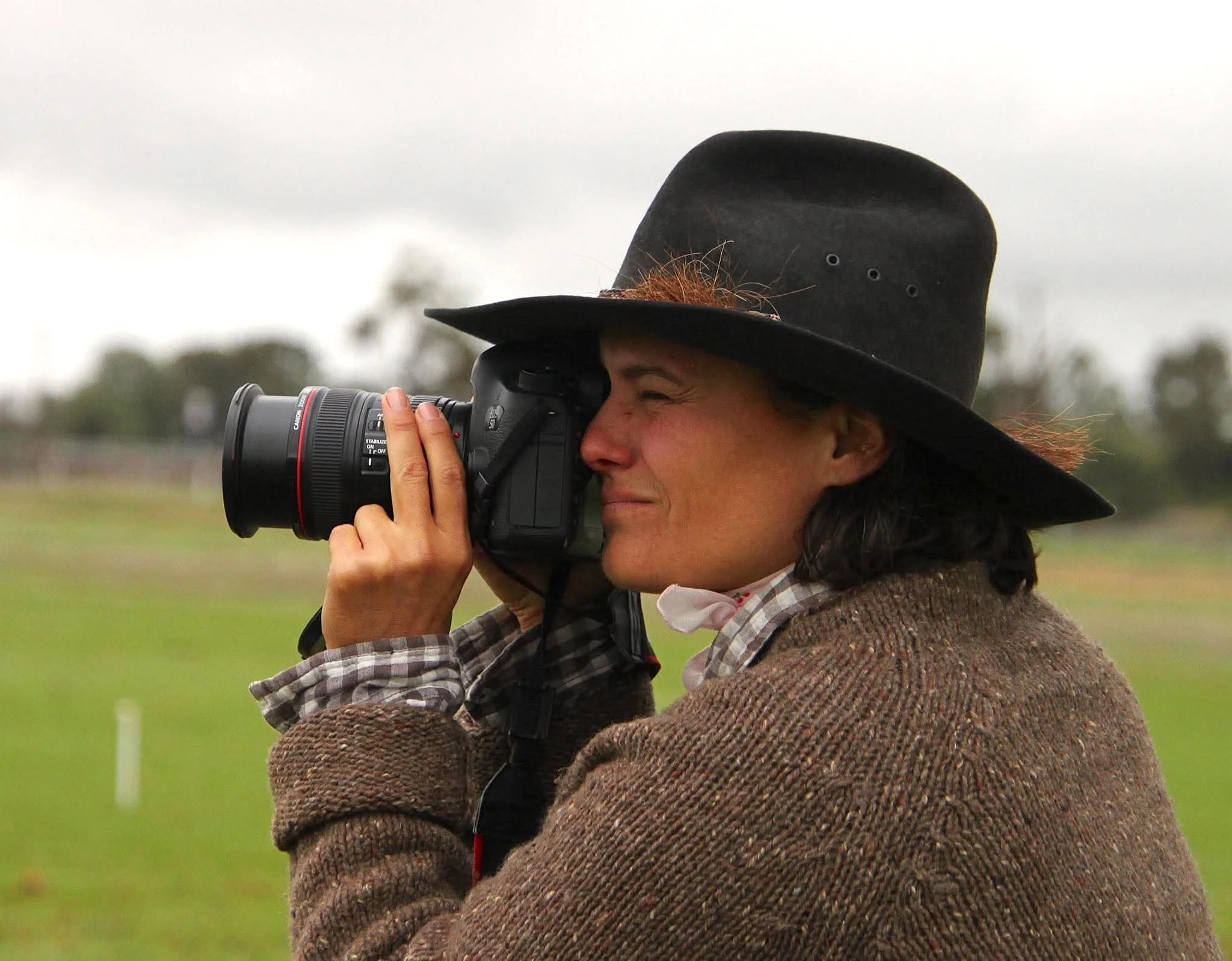
Me (Stephanie Warzecha) taking photos at The Golden Plough Festival. Image taken by Barry Smith.
Frequently Asked Questions
What is the Golden Plough Festival?
The Golden Plough Festival is Australia's premier horse ploughing competition and working horse heritage event, celebrating traditional horsemanship and rural skills.
Where is the Golden Plough Festival held?
The festival moves between host locations and was held at Peak Hill Showground in 2026.
Do you need to know anything about horse ploughing to attend?
Not at all. The event is welcoming to newcomers and provides plenty of opportunities to learn about the discipline.
What was the highlight of the festival?
For me, it was meeting the people behind the horses and seeing how passionate they are about preserving Australia's working horse heritage.
Is the Golden Plough Festival family friendly?
Yes. The event attracts visitors of all ages and includes demonstrations, carriage rides and activities that appeal to both horse enthusiasts and the general public.
Would you attend again?
Absolutely. It was one of the most enjoyable and inspiring equine heritage events I have attended.
