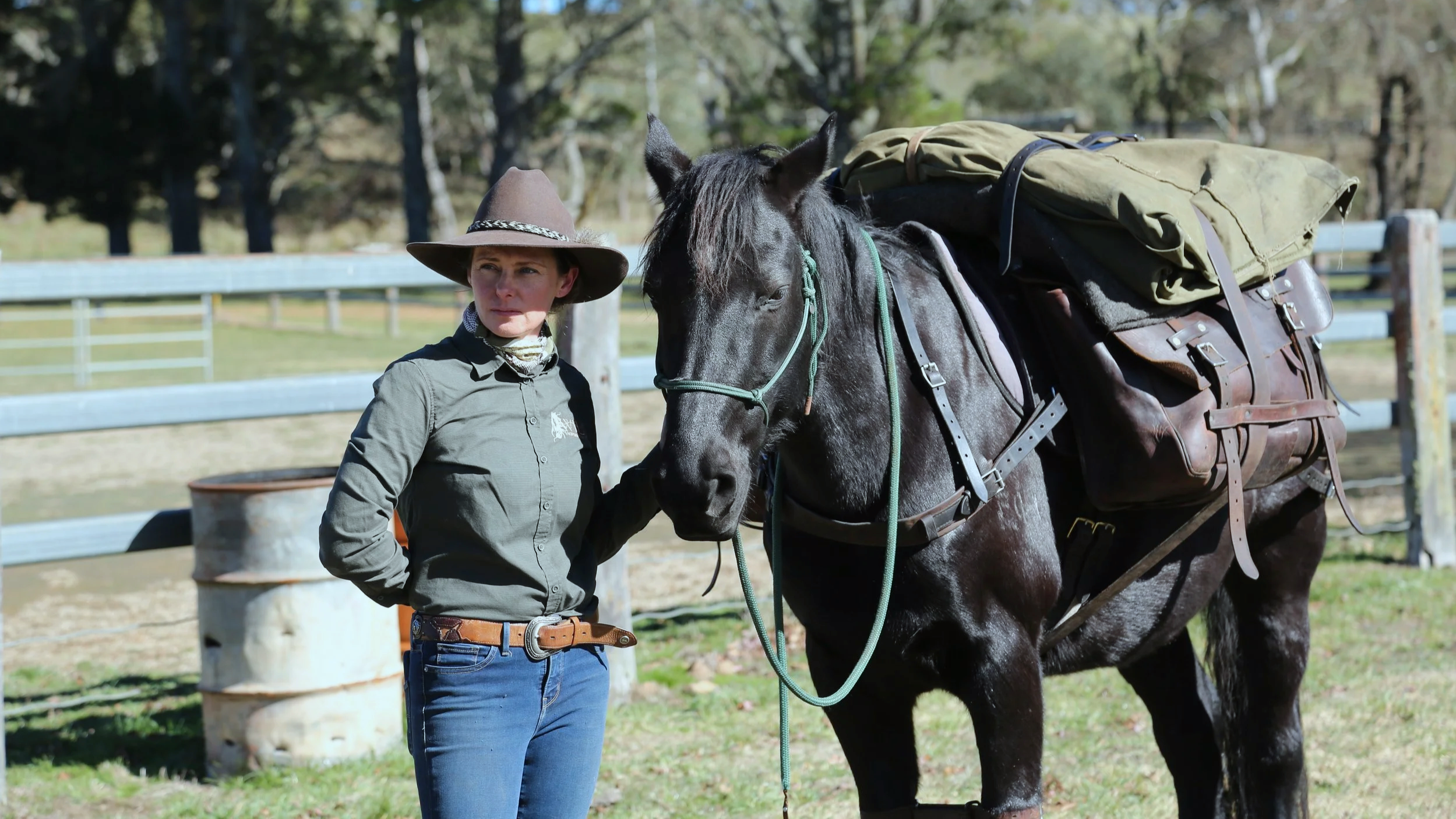
Kate Young with her Brumby, Legacy
A black brumby colt, a twenty thousand dollar offer, and the quiet life built around the horse she refused to sell. Kate Young is a pack saddler, horse trainer, brumby advocate and Assistant Principal who has built everything around horses one careful step at a time.
There is a horse on Kate Young's property at Tyringham that someone once offered her twenty thousand dollars for. She did not deliberate. She did not weigh it up. The answer was immediate and it has never changed: he is not for sale. That horse is Legacy, a black brumby colt who came into her life in 2012 in a way that still makes her smile to tell, and who has shaped everything about the horsewoman and teacher she has become. But we will get to Legacy. First, there is the matter of how Kate Young, Assistant Principal, horse trainer, pack saddler, brumby advocate, and a horsewoman who has spent two decades learning her craft in northern New South Wales, got here at all.
Monday through Friday, she drives an hour and a half each way to her job as an Assistant Principal at a high school in northern New South Wales, where she spends her days supporting students with complex learning, social, emotional and behavioural needs. By the time she gets home, feeds the horses, feeds the family, and catches a hot minute with her husband Jamie, it is time for bed. Then she does it again.
Weekends are for farm work, horse work, and the business administration that comes with running Wild Horsemanship from their 250 acre property, Wildwood, at Tyringham near Dorrigo. School holidays are when the clinics happen: pack saddling, trail riding, brumby handling, connection based horsemanship. It is the work she has been building toward for the better part of a decade.
The five year plan to go full time, she admits with characteristic dryness, is now in its seventh year. It has taken a few scenic detours.
"The dream is still very much alive," she says. "It's just not sticking to my schedule."
If that sounds like frustration, it isn't. Kate speaks about her life the way people do when they have long since made their peace with the gap between the plan and the reality, and found something worthwhile in the gap itself. She is, by her own description, a teacher and a learner in equal measure. The horses have made sure of that.
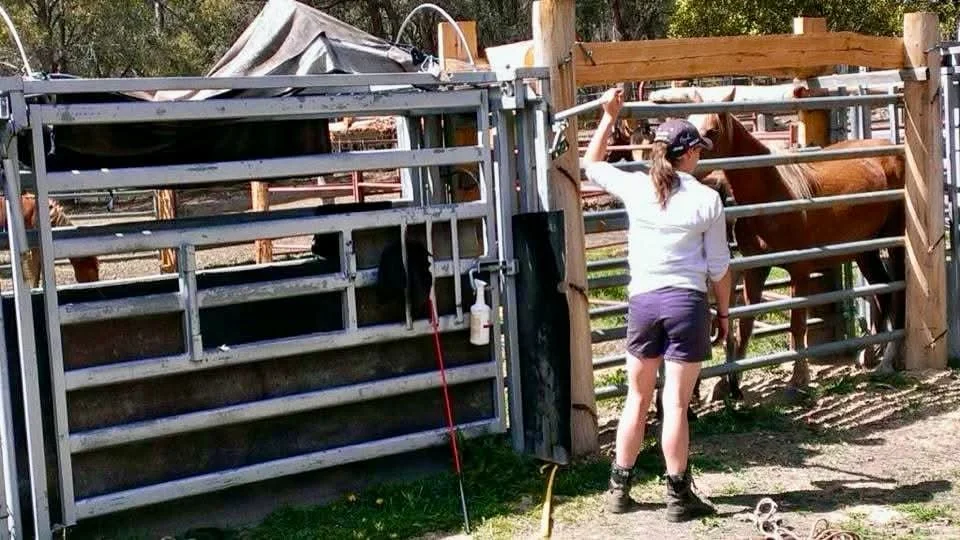
Kate Young working the yards at The Guy Fawkes Heritage Horse holding facility

Kate Young working the yards at The Guy Fawkes Heritage Horse holding facility
A Pony Around the Back
Kate did not grow up with horses. She grew up in the city, with no obvious pathway into the world she was already obsessed with, spending her school library time reading every horse book she could find and convincing her mother that any shopping trip needed to include a detour through the local saddlery.
"That was my horse fix," she says.
When the family moved to a small two acre property in the country, she decided it was finally her moment. She found an old stockman nearby, told him she had a paddock and wanted a horse, and that very afternoon walked one of his ponies home.
"Mum was just a little shocked to see me come around the back of the house with a pony," she says.
She tells the story as though it were completely reasonable, which in the logic of someone who has spent their whole life going straight at the thing they want, it was. She has always operated on the principle, stated without apology, that it is easier to ask for forgiveness than permission
The stockman's approach to horses was practical and unsentimental. There was a job to do, and the horse was expected to do it. That ethos shaped Kate's early years with horses, even as something about it never quite sat right with her. She loved horses too much to be entirely comfortable with an approach that did not seem to consider what the horse might be experiencing.
The shift, when it came, arrived gradually. Pat Parelli and Monty Roberts opened the door to a different way of thinking about horses. Other trainers followed. Ideas stayed or evolved or were quietly set aside. Her understanding deepened, complicated itself, and kept going.
"Good horsemanship is never finished," she says. "It continues to shift as we learn more about horses, ourselves, and the relationship between the two."
The Black Colt in the Middle Yard
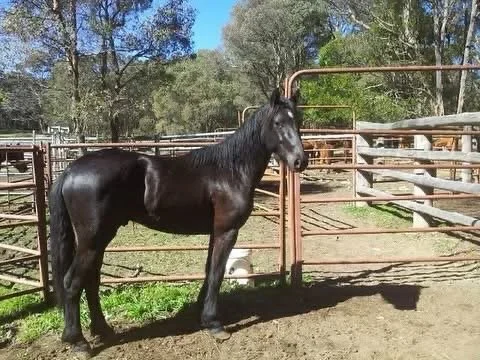
The black brumby colt, Legacy, when he was first trapped.
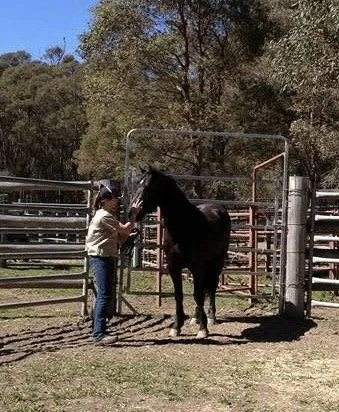
Kate meeting Legacy for the first time.
Kate first came to brumbies in 2007, somewhat sideways, through a request to update a website.
The Guy Fawkes Heritage Horse Association needed someone who somewhat knew their way around web development and happened to be horsey. Kate fit both descriptions. She agreed to take it on, and at that point had never actually met a brumby.
She had imagined them as rough, poorly conformed, a bit weedy, the product of isolation and inbreeding. She was comprehensively wrong.
"What I discovered instead was the result of natural selection at work," she says. "Horses shaped by the environment they live in — resilient, tough, sure-footed, incredibly intelligent. They completely changed the way I saw them."
Five years later, in 2012, a horse came through that changed more than her thinking about brumbies. It changed her understanding of what a partnership between horse and human could actually be.
The day of the rehoming event was busy, with more than 250 people through the gates, horses everywhere, Kate stationed at the bush kitchen and merchandise stall, never getting near the yards. One of the blokes from Caring for Country came over for a yarn and asked if she'd seen Star yet. She hadn't seen any of the horses. He just smiled and said they'd brought her something pretty special.
Throughout the day, people kept coming to ask about the black colt in the middle yard. Each time, Kate sent them to her friend Erica, who was handling the horse sales. Each time, her curiosity grew a little more.
By the time the crowd had gone and the dust had settled, she finally wandered over to see what all the fuss had been about. Through the movement of other horses, through the dust and the legs and the hooves, she caught a glimpse of black curly ears and shaggy black fetlocks. Then he stepped into view.
"He was this young black colt with a curly mane and tail, standing quietly while the horses around him charged about," she says. "He had this incredible presence — strong, proud, completely unflustered.”
She wandered back to where the volunteers were sharing a well earned beer and asked Erica who had bought the black colt. Erica smiled over the top of her glass and said: you did.
"Then Brett called out: 'Told you we brought you something pretty special.'"
The horse was Legacy. He has been with Kate ever since, and when she is asked which horse changed her life, the answer requires no thought at all.
Twenty Thousand Dollars and a Single Thought
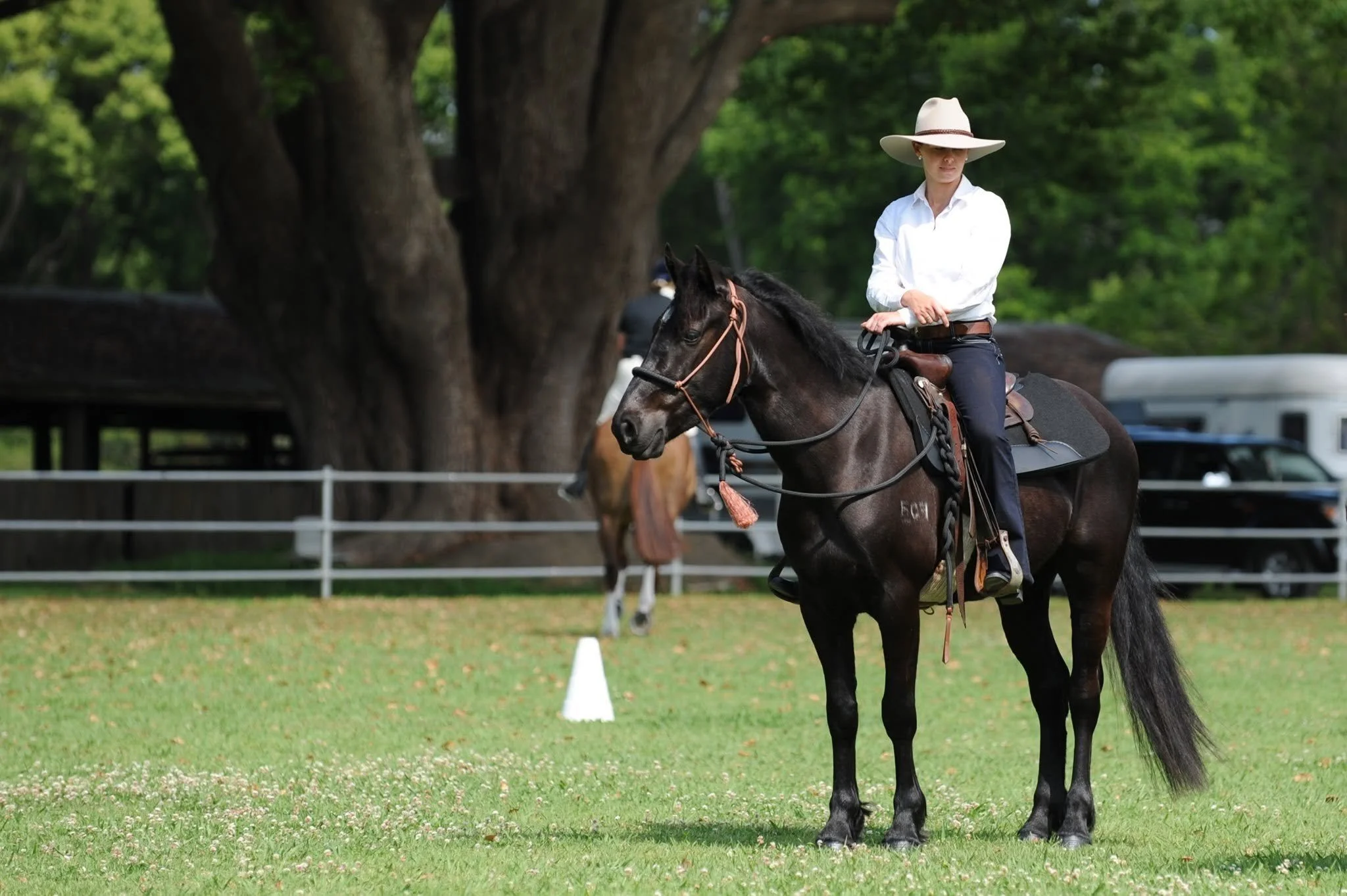
Kate Young at a show with her brumby, Legacy. Photo by Still Free Photography
At some point after Legacy came into Kate's life, she was offered twenty thousand dollars for him.
She describes the moment without drama, because there was no drama in it.
"Only one thing went through my mind," she says. "He ain't for sale."
There was no internal negotiation. No weighing of pros and cons. Legacy is not just a horse she owns. He is her partner, and the relationship they have built over many years together is not something she has ever been willing to put a number on.
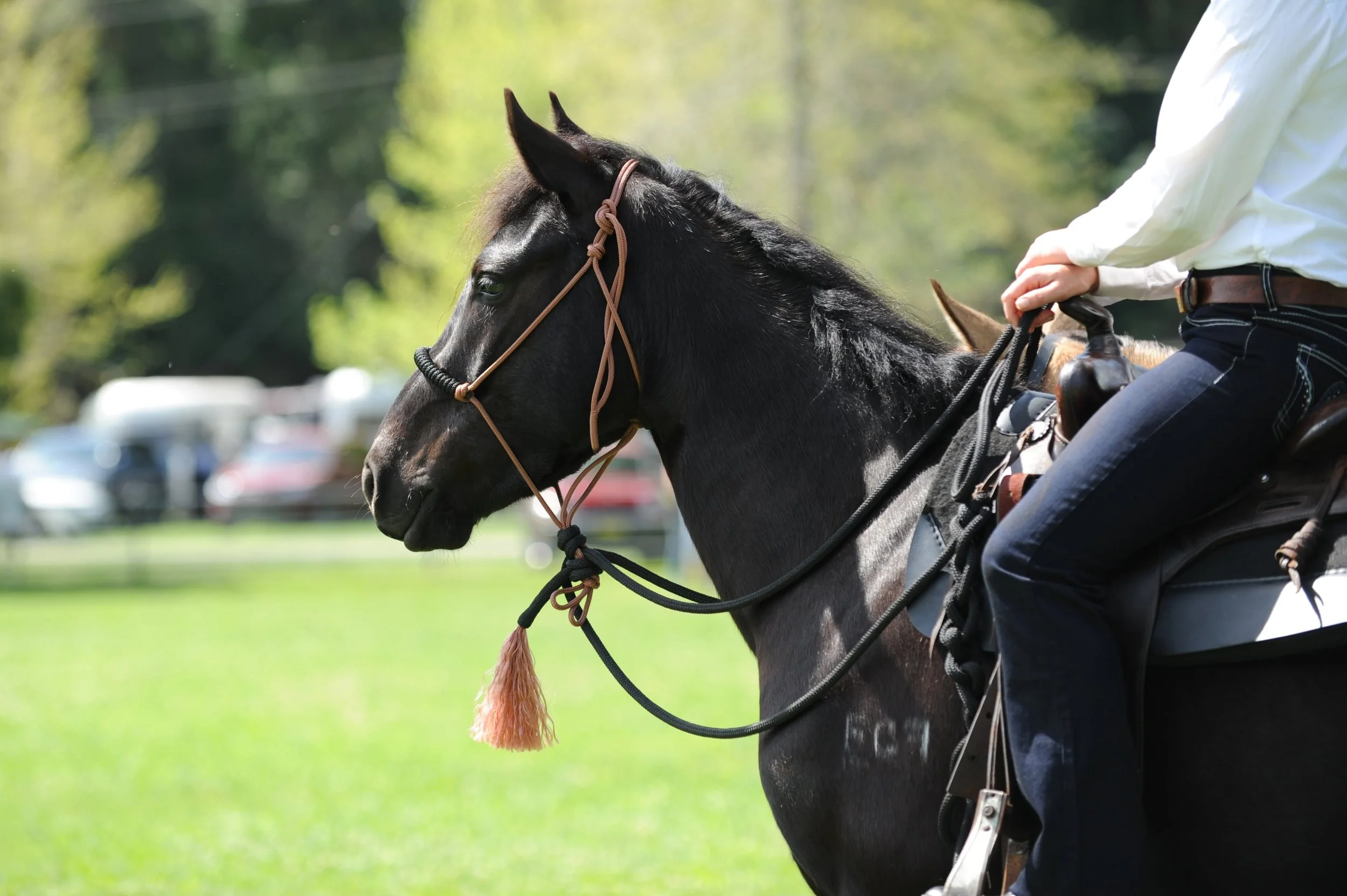
Beautiful Brumby, Legacy. Photo by Still Free Photography
What Legacy has given her goes well beyond the riding. He has taught her what real partnership feels like, not control, not the performance of harmony, but two individuals working genuinely to understand each other, staying connected even when things go wrong. He reads her. She reads him. That mutual comprehension has required her to become more honest about what she brings into the paddock with her on any given day, because Legacy notices, and responds accordingly.
"He's taught me to slow down, to listen more carefully, and to assess what's actually happening in the moment rather than what I think should be happening," she says. "He's made me braver and taught me to soften a little with myself."
Mistakes and challenges, she has learned from him, are not things to shut down or hide from. They are things to stay curious about. To feel okay inside the process of learning, rather than always trying to arrive at the right answer.
"That's probably the biggest gift he's given me," she says.
If Legacy could speak, Kate thinks he would say something simple: you show up honestly, you try to understand me, and when things don't go right, you don't give up on the conversation. You stay in it and work it out.
"And mostly," she says, "I think he'd say: we understand each other. I am safe. And that's enough."
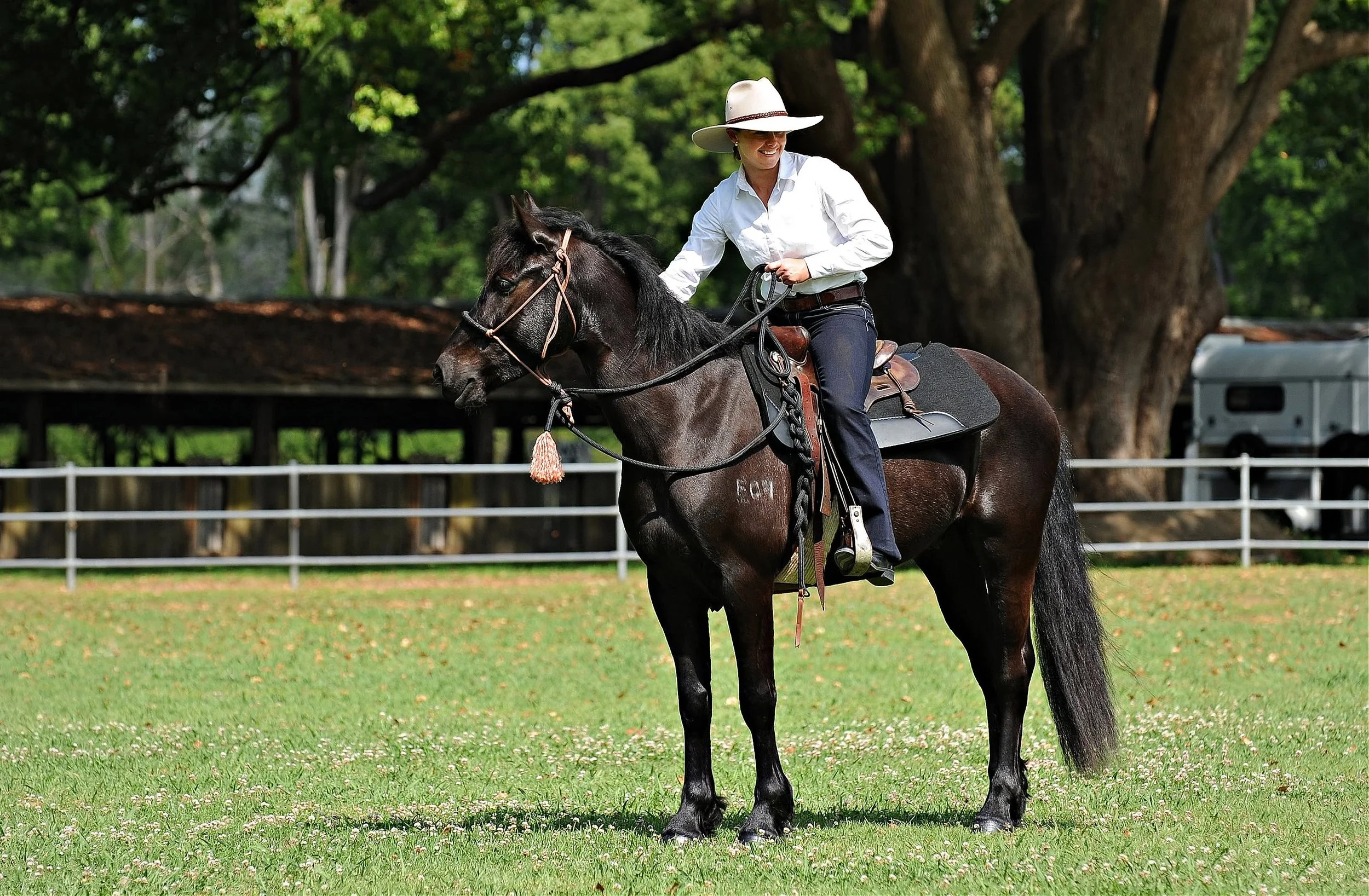
Horse trainer, Kate Young, with her brumby, Legacy. Photo by Still Free Photography
What Brumbies Actually Are
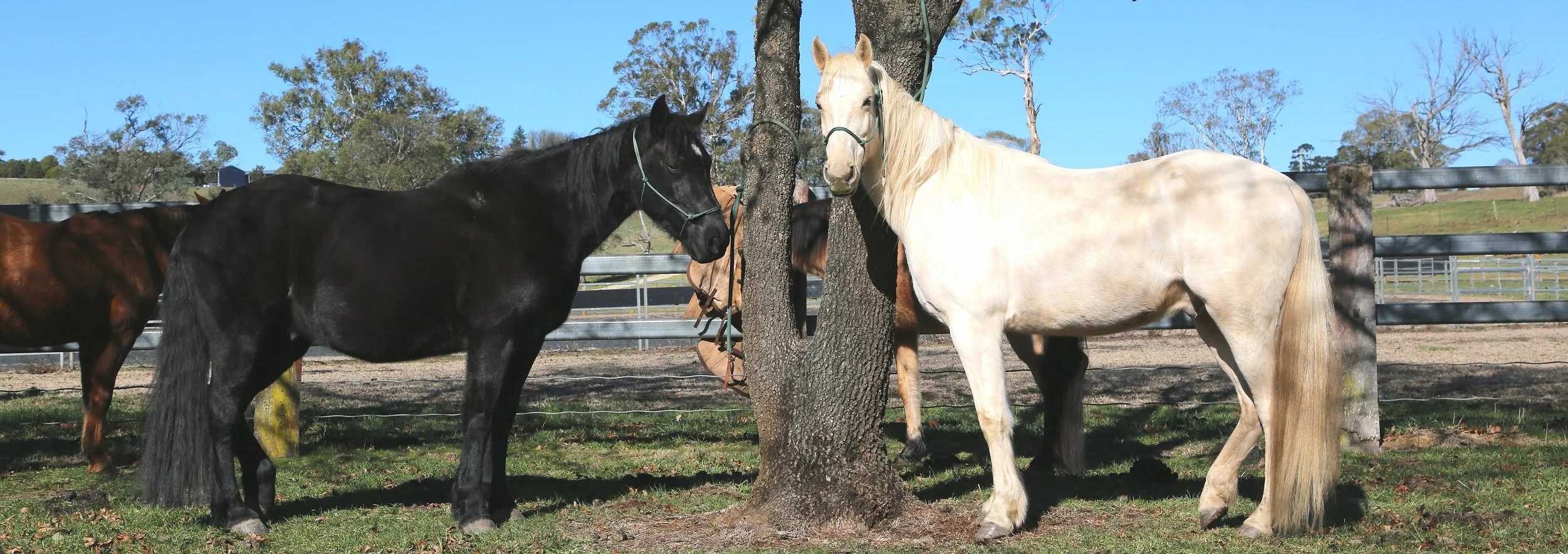
Two Guy Fawkes Brumbies standing patiently.
One of the things Kate has spent years quietly correcting is the gap between what people assume brumbies are and what they actually turn out to be.
The assumptions arrive first: wild born, therefore dangerous. Unmanaged breeding, therefore poor conformation. Inbred, therefore unpredictable. People rule them out before they have spent an hour with one.
What Kate has found, working with Guy Fawkes brumbies in particular, is quite the opposite. They are adaptable, quick to learn, environmentally aware in ways that many domestic horses are not. Practically minded. Sensible about where they put their feet. Highly attuned to the dynamics within a group. Not problem horses at all, but horses that require a different kind of conversation at the start, one built on trust rather than compliance.
"Once that conversation is established," she says, "they're often some of the most willing, trainable and straightforward horses you can work with."
What brumbies teach, more than anything, is precision. Because they have not been shaped by years of human handling, nothing in their communication is exaggerated or overdone for the benefit of a slow observer. Their responses are subtle and immediate. If your timing is even slightly off, too slow or a moment too early, you miss the conversation entirely. They sharpen your ability to be present in a way that is difficult to replicate with domestic horses.
"They show you what natural herd communication looks like without the interruption of domestication," she says. "And that forces you to become a better observer and a better listener."
The Guy Fawkes Heritage Horse
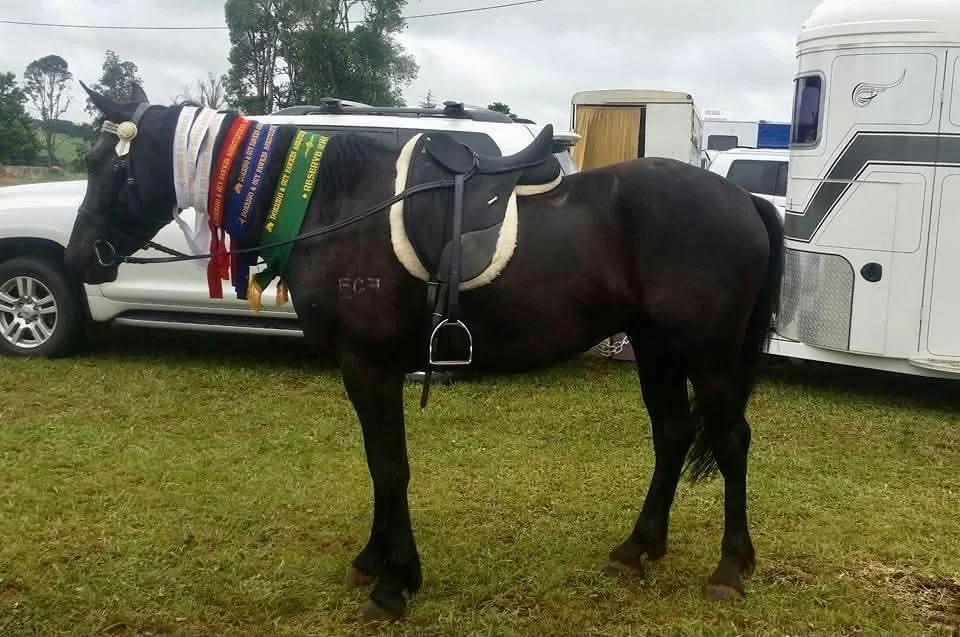
From a wild Brumby to lots of ribbons won at a show

Kate Young training a Guy Fawkes Heritage Horse
Kate's relationship with the Guy Fawkes River National Park goes deeper than training. She has spent years watching the wild horses move through that country, and all of her own brumbies have come from the Guy Fawkes mob. She knows these horses the way you know something you have watched closely for a long time.
She volunteers with the Guy Fawkes Heritage Horse Association, and she is careful to explain what that means and what it does not mean.
"People sometimes assume I must be a passionate activist who believes horses belong in national parks forever," she says. "That's not my position."
She loves seeing brumbies living wild and free, and would be genuinely saddened if the day came when there were none left. But she also recognises that horses are an introduced species, and she cannot ignore the impact unmanaged populations have on native ecosystems. She has seen first hand what happens when horse numbers outgrow what the landscape can support during prolonged drought. She does not wish to see that again.
Her position is that management is essential, but that the conversation should not be reduced to a choice between doing nothing and aerial culling. Those are not the only options. She has seen passive trapping work. She has seen horses removed from the park, given a chance, and go on to become exceptional riding horses and companions.
"The horses didn't choose to be there," she says. "People put them there. They don't mismanage their own populations — we do. I think we have a responsibility to manage them ethically, with as much compassion as we can.”
The country that is now the Guy Fawkes River National Park was once grazed by families who deliberately bred horses for soundness, athleticism, trainability and good minds. Those qualities have continued through generations, shaped by careful breeding and by the demands of rugged country. The result, Kate believes, is a remarkably capable horse and an important thread in Australia's pastoral and military heritage.
The Guy Fawkes Heritage Horse is also a recognised breed with an established studbook, which means those bloodlines can be preserved and promoted outside the park while responsible management continues within it.
"That's how we honour both our heritage and our responsibility to the future," she says.
The Art of the Pack Saddle
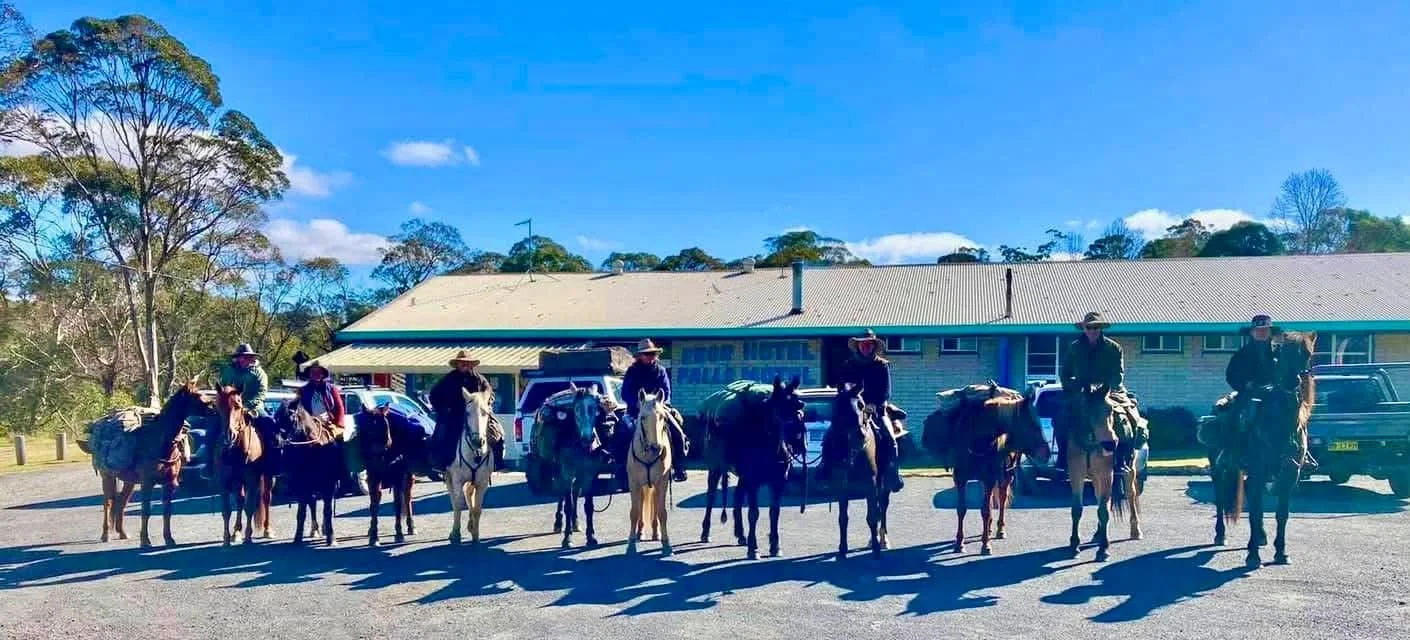
290km Pack saddling trip with friends over 15 days.
If there is a corner of horsemanship that Kate Young inhabits more distinctively than any other, it is pack saddling, the traditional craft of loading a horse to carry supplies into country that cannot be reached any other way.
She came to it eleven years ago, not out of romantic interest but out of pure practicality. She wanted to ride into the Guy Fawkes River National Park, where her horses came from. The only way in was on horseback, and if she was going in, she needed to be able to carry what she needed. She learned pack saddling to get there.
It got into her blood almost immediately.
"Pack saddling connects us with our horses, our friends, and the land we're moving through," she says. "There's something about travelling that way that slows everything down and makes you more present."
It is not a discipline that features in the mainstream equestrian world. There are not many people who are genuinely knowledgeable in the craft, and the equipment is not cheap. A new pack saddle alone can cost between three and six thousand dollars, pack bags another one to one and a half thousand, and by the time you are fully set up with camping gear, first aid, and supplies, you are looking at somewhere around ten thousand dollars for a complete setup. Kate acknowledges this with the cheerful honesty of someone who has already had that conversation with her husband more than once.
What she has noticed, though, is that interest is growing. People are moving away from competitive riding and toward a more grounded, connected way of being with their horses. Trail riding and trekking are drawing in a new generation of riders who want a horse they can trust in the real world, not just one that performs well in an arena. Pack saddling, the most demanding version of that ambition, is finding new students.
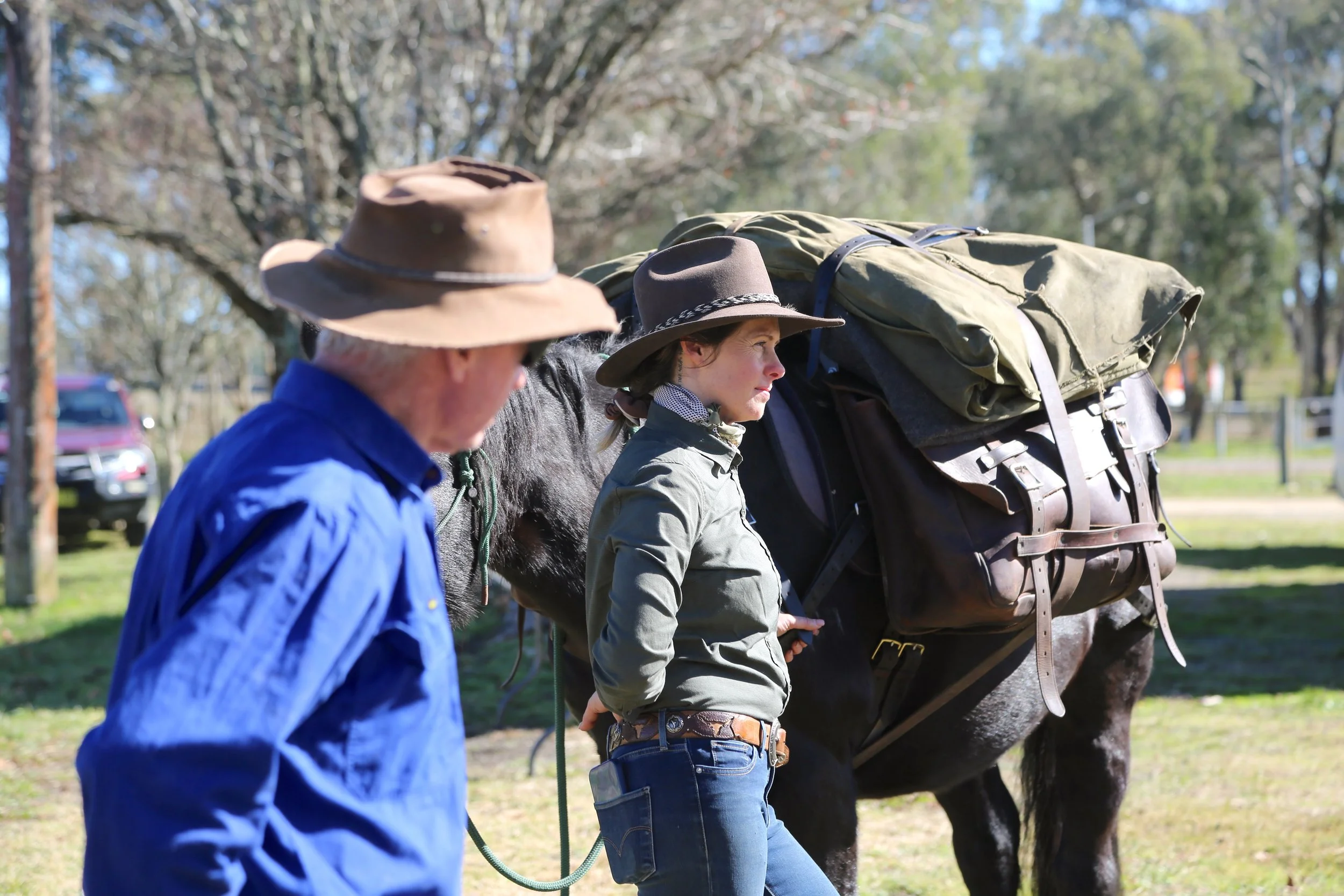
Graeme and Kate teaching at the Wild Beginnings Packsaddling clinic in Ebor, NSW.
Through Wild Horsemanship, Kate now runs a progressive pack saddling pathway, starting with Wild Beginnings, which introduces the fundamentals over two days, and successive levels, The Pack Saddling Pathway, that build toward supported overnight treks. The most common mistake beginners make, she says without hesitation, is throwing a pack saddle on a riding horse and assuming it will go smoothly. A good riding horse is not automatically a good pack horse. The preparation is everything.
She quotes what she calls the Rule of 6 Ps with particular relish: Prior Preparation Prevents Piss Poor Performance. In the context of pack saddling, she has adapted it: Prior Preparation Produces Perfect Pack Ponies.
Asked what makes brumbies especially suited to pack work, she does not hesitate.
"Brumbies make the best pack horses," she says. "Full stop."
Their soundness, their adaptability, their natural ability to navigate varied terrain and river crossings, their sensible minds. All of it makes them exceptional candidates for the work. The country that shaped them has prepared them for exactly this kind of travel.
What Freedom Looks Like
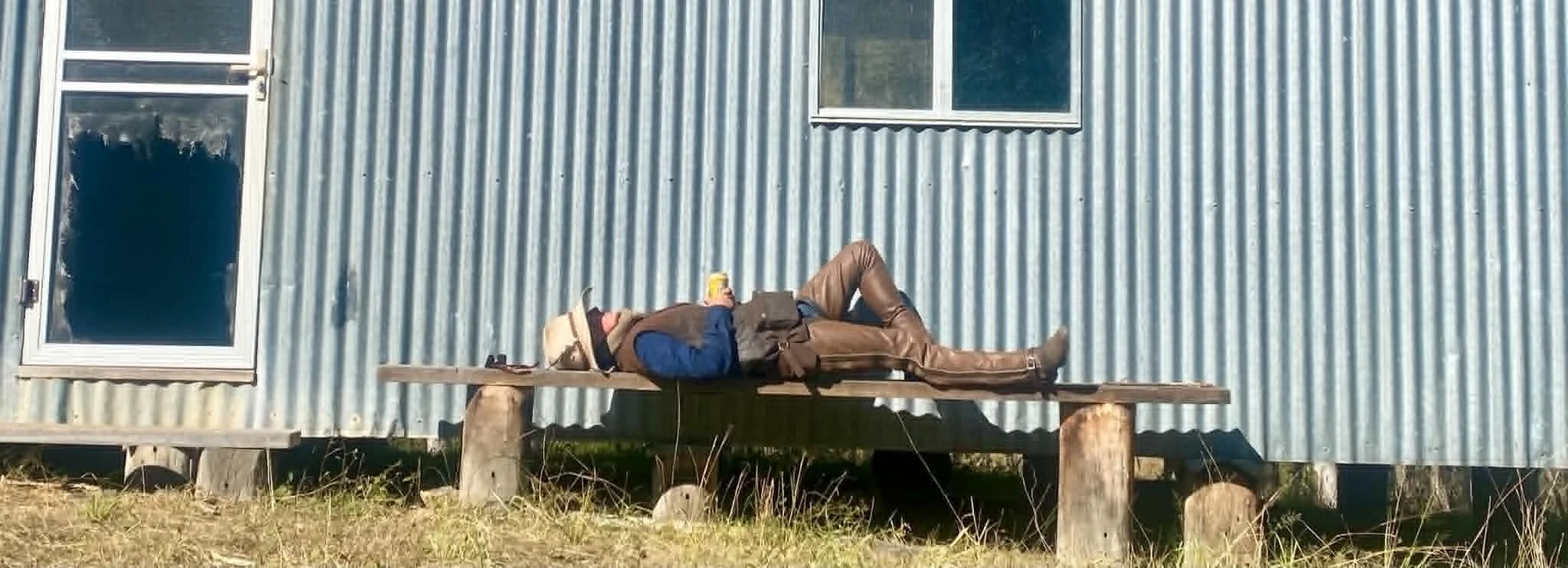
Kate Young getting horizontal after hours and days in the saddle on a packsaddling trip
Kate's most significant ride to date was a fifteen day journey from Nowendoc to Ebor, with nine riders, eleven horses, and 290 kilometres of stunning and often brutal northern New South Wales country. Freezing cold camps, rough terrain, a few genuinely hard days. Also: a midway rest stop where a friend's parents arrived with hot soup, birthday cake, fresh supplies, and a large tub with candles and a privacy screen so the riders could have a warm bath in the middle of the bush.
She tells that story with obvious delight.
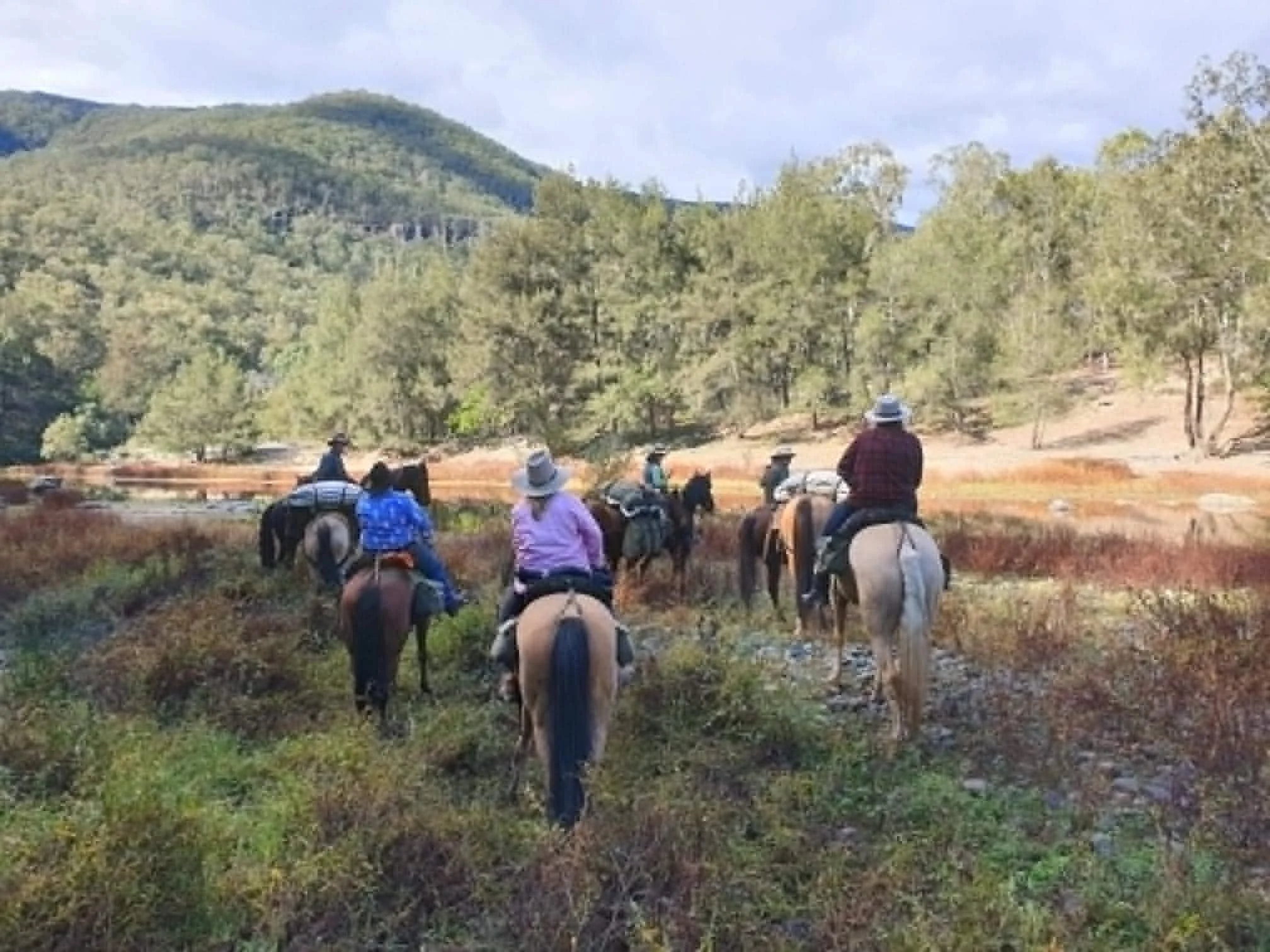
Kate Young Packsaddling with friends over 15 days
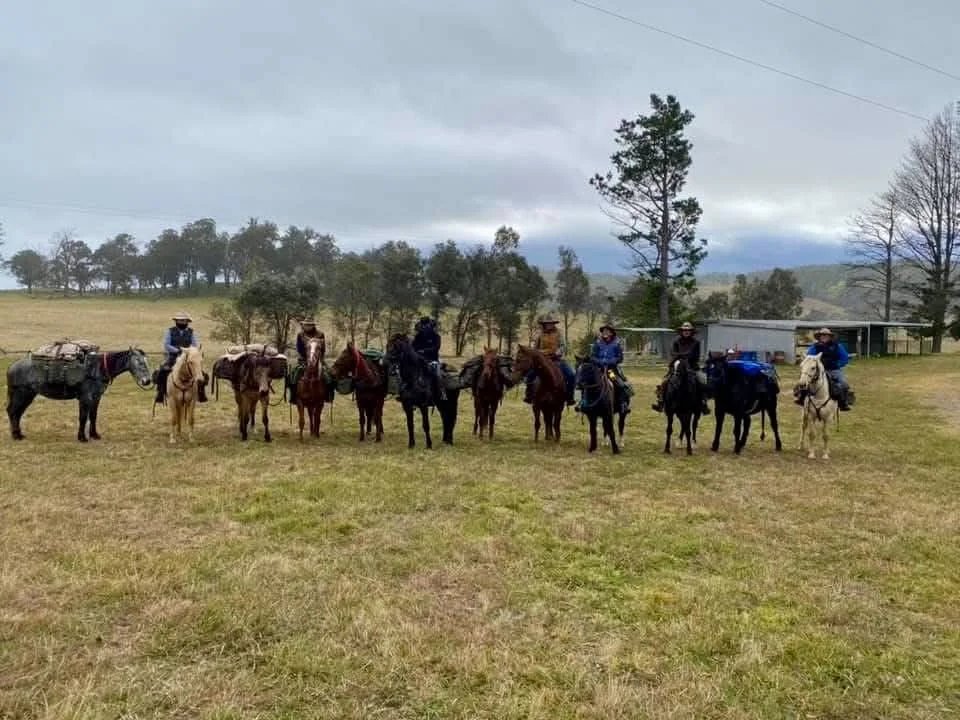
Kate Young Packsaddling with friends, riding 290km
Her perfect day in the bush is simpler. Waking up in a good camping spot to the sound of magpies. A leisurely breakfast of coffee, bacon and eggs. A slow, quiet ride along the river on Legacy, watching wild brumbies, following the rainbow bee eaters in and out of their burrows. An afternoon swim at a waterhole with the horses. Cheese and a river view while the horses graze. A campfire at night, woodsmoke and good friends and the sound of laughter.
"I'm a pretty simple gal," she says. "That to me is the perfect day."
Freedom, for Kate, is the complete absence of pressure. A reconnection to the horses, to the earth, and to herself.
"Like letting out a held breath," she says, when asked what it feels like to ride away from everything.
That is the whole sentence. She does not need another one.
Horse First, Not Horse Led
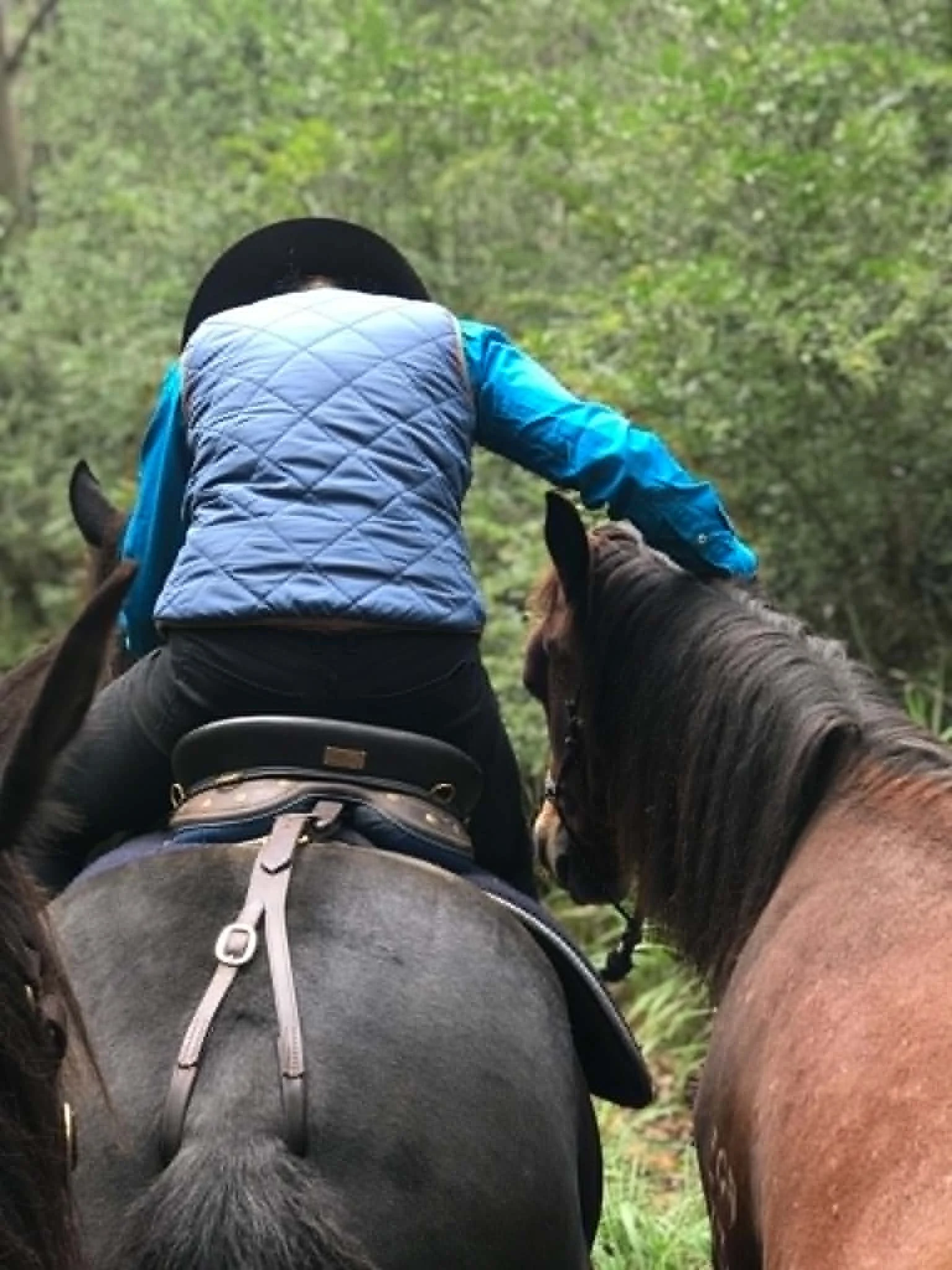
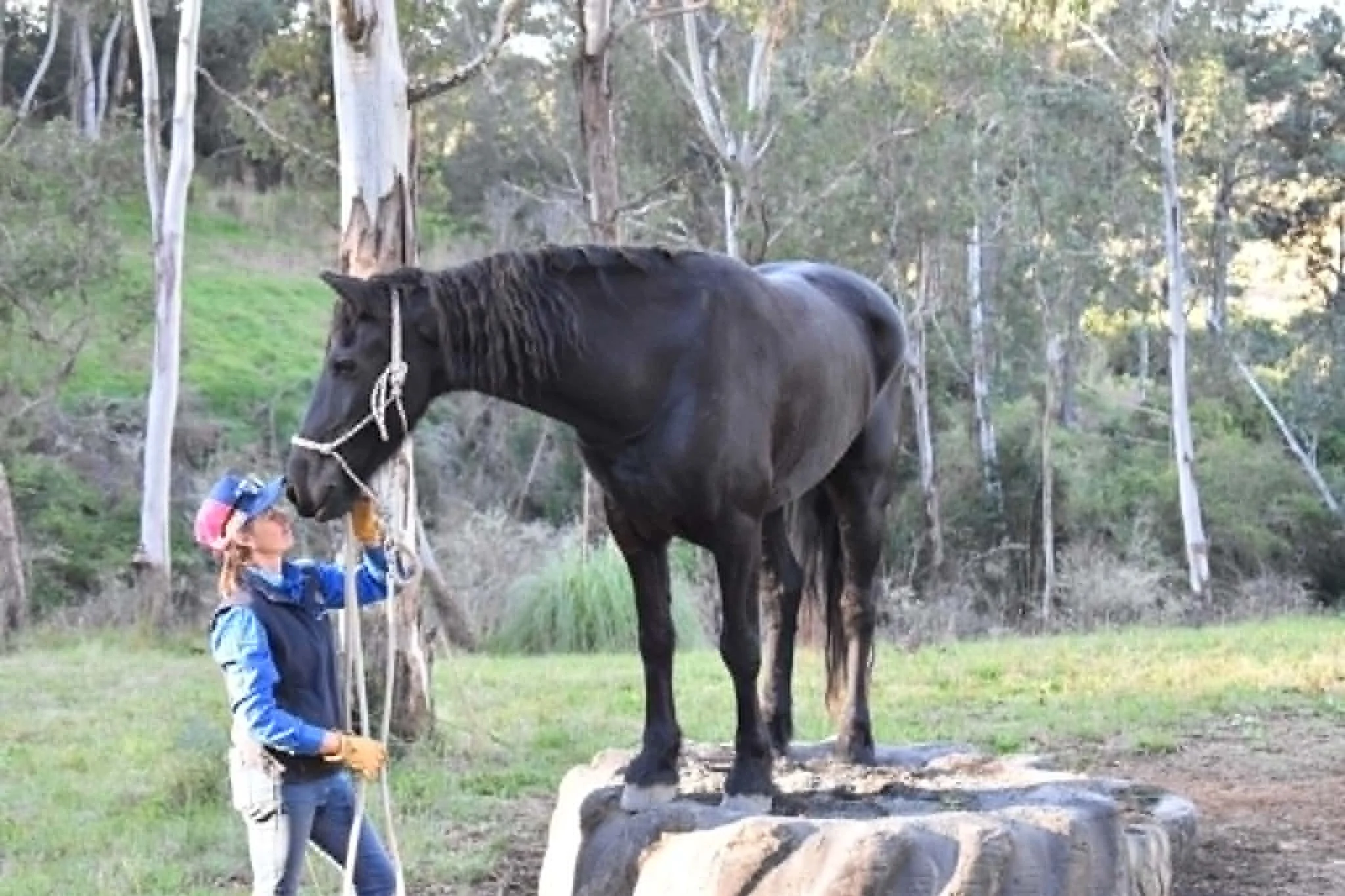
Kate's training philosophy, horse first but not horse led, is both a clear statement of values and a deliberate pushback against a misconception she encounters regularly.
Putting the horse first does not mean giving the horse every decision. It means understanding how horses think, learn and perceive the world, and communicating in a way they can actually understand. It means building confidence, clarity and trust. It also means providing the guidance and boundaries that horses genuinely need to feel secure.
She is particularly thoughtful on the question of what horses reveal about the people who work with them, because she disagrees with the most common framing of it.
"There's a saying that horses are our mirror," she says. "I don't see it that way."
She sees horses as honest responders. They respond to how we communicate, to whether they feel safe and understood, to the environment we create around them. Their behaviour gives us feedback about the relationship, but that feedback is always contextual. The horse is not judging our character, not exposing our personality. It is responding to what is actually happening right now.
"What horses really reveal," she says, "is the effectiveness of our communication, the quality of the relationship we've built, and where we still have opportunities to learn."
The hard truth that almost everyone eventually has to learn, in her view, is the most important one: horses don't owe us anything. Not trust, not confidence, not willingness, not even because we love them and care for them. Those things are built through our actions, our consistency, and the experiences we create together over time.
She cites the neuroscientist Janet Jones, whose book Horse Brain, Human Brain has influenced Kate's thinking significantly:
"Let's try to connect with animals at their level, instead of demanding that they constantly adjust to us."
That, she says, is what she wishes more people understood.
The Life She Is Building
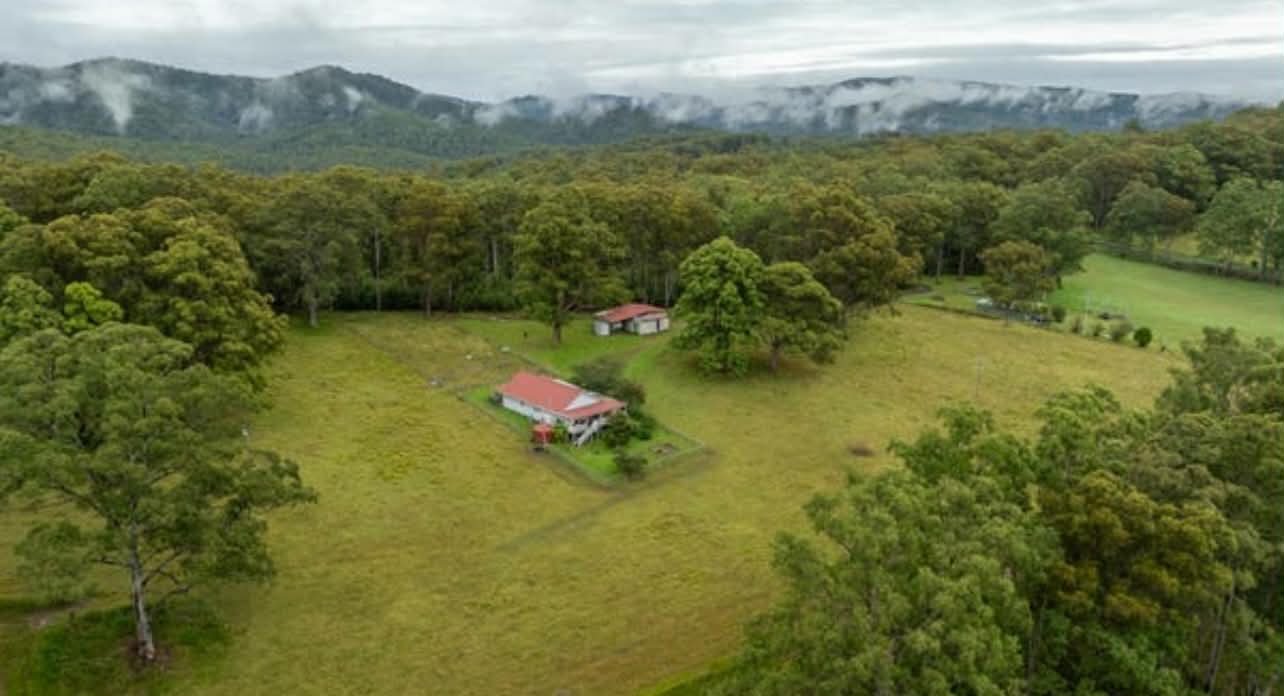
This is Wildwood
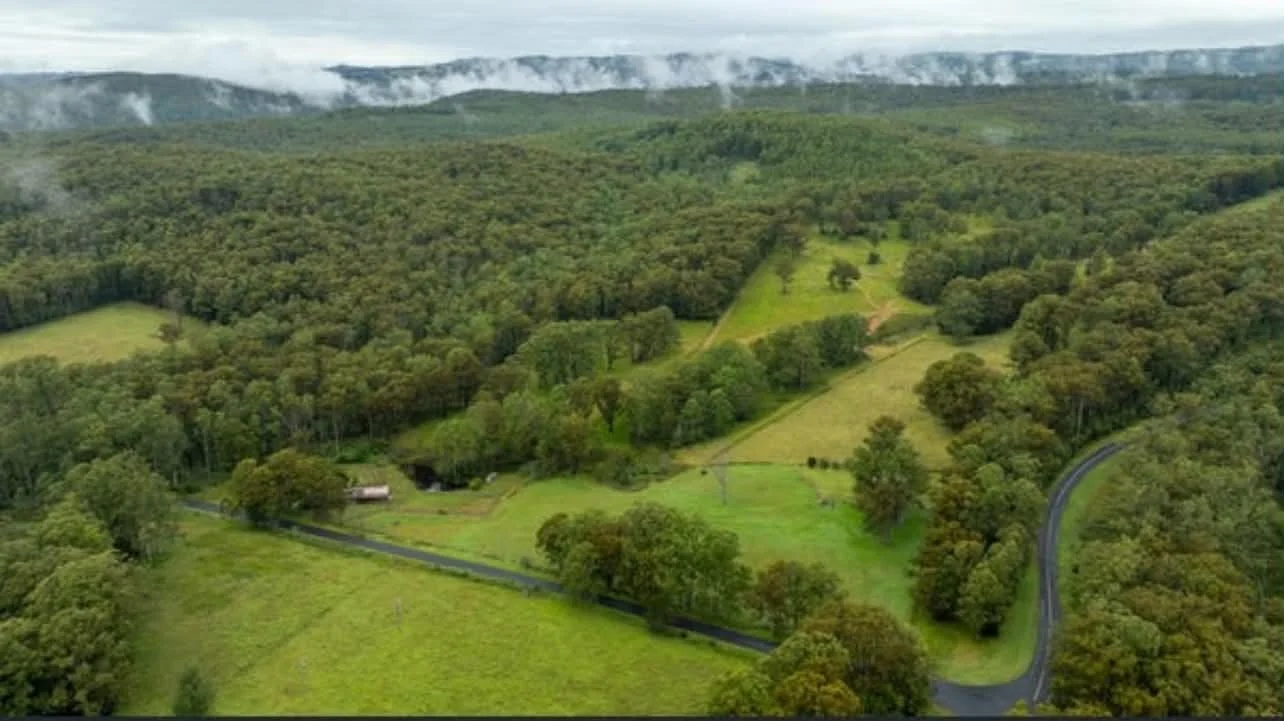
The plans are to run regular clinics at Wildwood
The five year plan is in its seventh year, but it is moving.
Eighteen months ago, Kate and Jamie bought Wildwood. The infrastructure is coming together, fences, paddocks, clinic facilities, and as it does, the possibility of running clinics monthly rather than only during school holidays starts to come into view. The full time life with horses is still ahead, but it is closer than it has ever been.
She does not want a business for the sake of having a business. She wants a life where home, horses and work exist in the same place, mornings with the horses before anyone else needs anything, days spent helping people build real relationships with the animals they share their lives with.
"If I'm lucky enough to do that every day," she says, "I'll consider myself incredibly fortunate."
The moments that stay with her from the clinics are not the technical milestones or the skills acquired. They are the moments when a horse starts to trust the person beside it. When a woman who arrived at a confidence clinic in tears rides out into the bush at the end of the day, relaxed and smiling, and later comes back for a multi day trek. When the conversation between horse and human becomes clearer and more honest, and the relationship shifts from trying to make something happen to something closer to understanding.
"The duck's nuts of why I do this," she says, with characteristic bluntness, "is seeing horses become confident and comfortable in their relationships with their humans."
Her dream adventure is still ahead of her too. She would love to ride sections of the National Trail she has not yet explored, particularly the Tenterfield area, with its extraordinary landscapes. Her favourite thing about the Australian bush, she says without hesitation, is the wild freedom of it. And the one thing she believes every horse person should experience at least once in their life.
"The first touch of a wild brumby."
And if someone is thinking about working with a brumby for the very first time?
"Trust first," she says. "Everything else comes later. And it takes as long as it takes — horses don't follow our timeline."
If you enjoyed this story, join The Bush Pony Post for more firsthand profiles and stories from Australia's bush horse culture.
About Kate Young
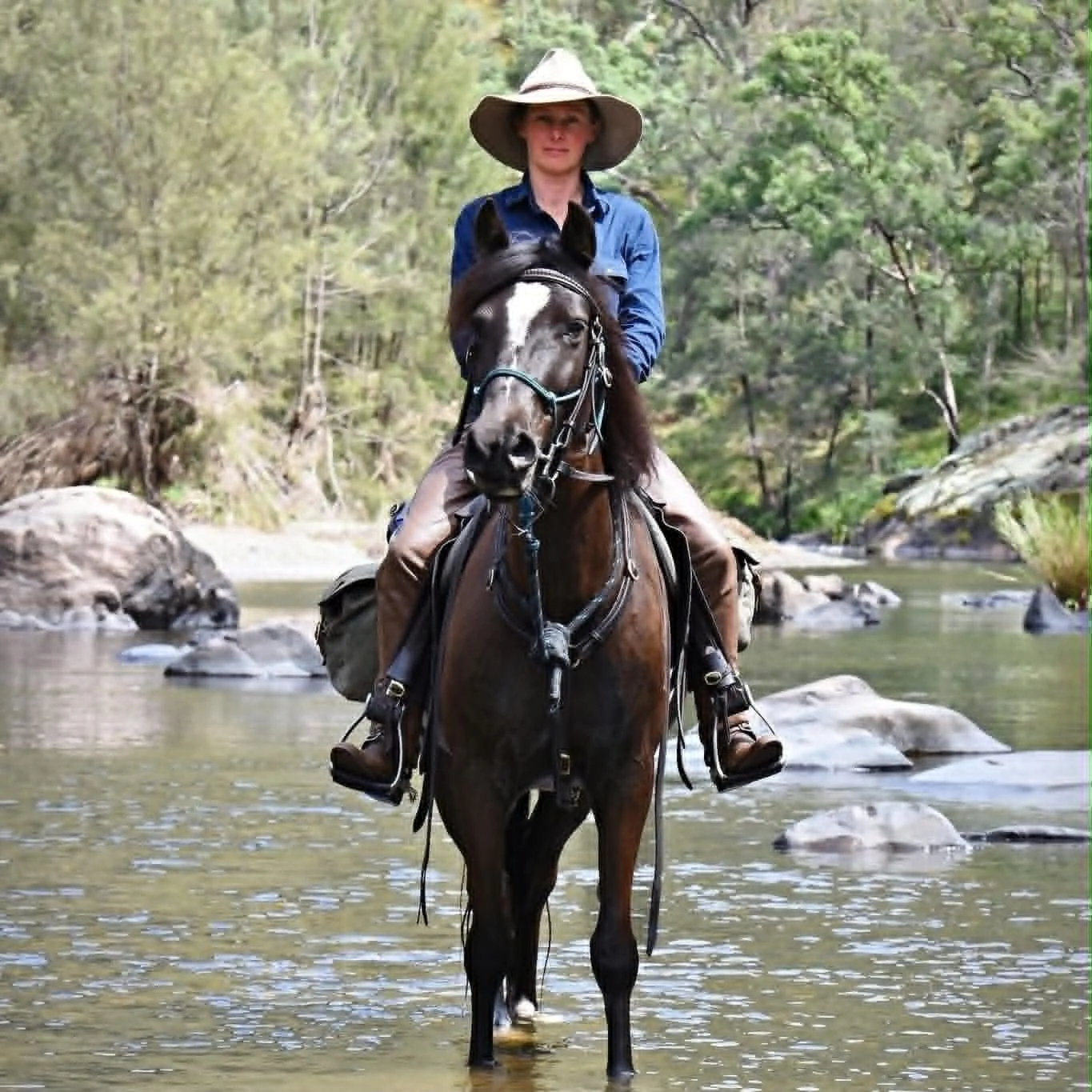
Kate Young is based at Wildwood farm, Tyringham, near Dorrigo in northern New South Wales. Wild Horsemanship offers clinics and workshops in connection based horsemanship, trail and confidence riding, and pack saddling, including the Wild Beginnings Introduction to Pack Saddling two day workshop and the progressive Pack Saddling Pathway series. Kate also collaborates with Australian and international horsemen and women to offer additional horsemanship and holistic wellbeing clinics.
Visit wildhorsemanship.com.au to find out more, or read our full review of her Wild Beginnings pack saddling clinic.
